Walk into almost any church, and you’ll see much that is familiar. The differences aren’t as obvious, but over time, their impact is unmistakable. While there are a number of priorities that Baptist churches hold in common, two in particular distinguish them from other historic denominations. Understanding what they are and why Baptists hold to them provides a helpful framework for evaluating the church.
1. Membership by new birth, not natural birth
In some denominations, the majority of the congregation has been born into the church. In Roman Catholic, Orthodox, Lutheran, and Presbyterian churches, it’s common for the infants of adherents to be baptized and be considered part of the church family long before they have ever heard or understood the gospel. While some process of confirmation often follows to build the child’s faith and understanding, faith is not a prerequisite for being a part of the church.
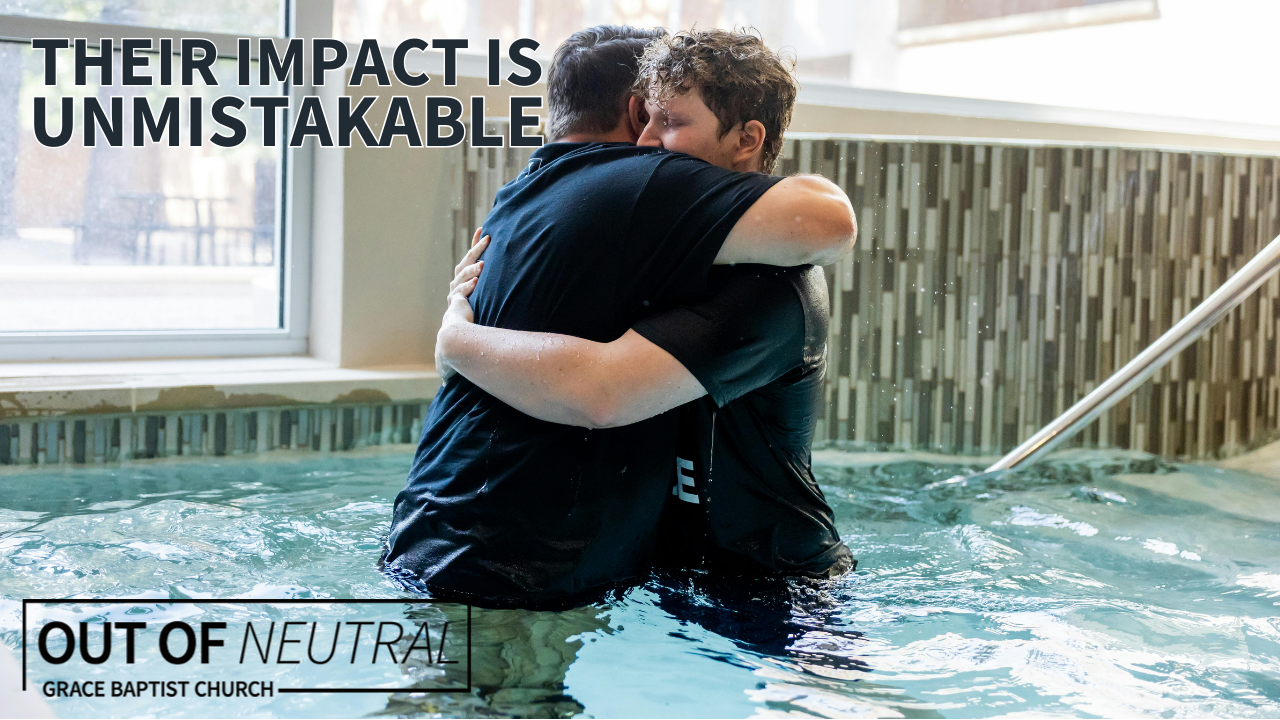
Baptists believe that the church is made up only of those who have repented and trusted in Jesus and express that through baptism. On the Day of Pentecost, for instance, we’re told that “those who received [Peter’s] word were baptized, and there were added that day about three thousand souls” (Acts 2:41). A faith response to the gospel in baptism clearly appears to be the defining characteristic of those who formed the community of believers.
This passage is significant since Peter explicitly issued the promise “for you and for your children” (Acts 2:39), so one might expect to read “those who received his word, along with their children, were baptized…,” but that isn’t the case. Luke isn’t concerned with whether they are adults or children. All that matters is whether they have “received his word” (Acts 2:41) to “repent and be baptized” (Acts 2:38).
Paul’s description of the church in Corinth is also hard to imagine as including those who don’t yet believe. He writes, “To the church of God that is in Corinth, to those sanctified in Christ Jesus, called to be saints together with all those who in every place call upon the name of our Lord Jesus Christ” (1 Corinthians 1:2). He believes that the church is made up of those who call on the name of the Lord. They are the ones who are sanctified and called to be saints. How can that include the children of believers who can’t yet speak, let alone call on the name of Jesus?
Surely, John had it right when he gave the qualifications of the children of God in John 1:12-13: “But to all who did receive him, who believed in his name, he gave the right to become children of God, who were born, not of blood nor of the will of the flesh nor of the will of man, but of God.”
2. Served by pastors and deacons, not hierarchy
This difference in who belongs to the church naturally leads to another question: How is the church organized? Unlike the Catholic Church with its priests, bishops, archbishops, and cardinals, ultimately under the Pope, the Baptist church has a flat structure. Each congregation is self-governing and served by elders and deacons with Christ as its head.
A deacon is a serving role, perhaps exemplified by the seven chosen to take over the distribution of food to the Hellenist widows so that the apostles could focus on prayer and the ministry of the Word in Acts 6:1-7.
The various biblical words used by more hierarchical denominations to describe their leaders all seem to be used interchangeably in the New Testament. In Acts 20, for example, Paul “called the elders” (Acts 20:17) and told them to “shepherd the church of God,” of which “the Holy Spirit made you overseers” (Acts 20:28). The word “overseer” here is the Greek word “episkopos” which appears in older translations like the KJV as “bishop.” Similarly, our word “pastor” comes from the Latin word for “shepherd.” Elder, shepherd, pastor, overseer, and bishop are just different terms for the same office.
That’s also why Peter can write to “the elders among you, as a fellow elder” in 1 Peter 5:1 and urge them to “shepherd the flock” (or pastor the flock), exercising oversight” (1 Peter 5:2) because these are all responsibilities of the one office.
The New Testament knows nothing of elders ruled by bishops, overseen by cardinals, who report to a Pope. Even Peter related to elders as a fellow elder. The church is a flat network of interdependent congregations whose leaders relate to one another as brothers and co-labourers.
These distinctives are captured in the Fellowship Affirmation of Faith section on the church:
We believe that the universal church, the Body of Christ, comprised of all true believers in heaven and on earth, is expressed on earth in local churches. We believe a properly ordered local church consists of believers, baptized by immersion, who have been called out from the world, separated to the Lord Jesus; and voluntarily associated for the ministry of the word, the mutual edification of its members, the propagation of the faith, the observance of the ordinances, and the doing of good works. We believe it is a self-governing body responsible for exercising its own divinely awarded gifts, precepts, and privileges under the lordship of Christ, the Head and Chief Shepherd of the church. We believe that its officers are biblically qualified elders, who shepherd and oversee God’s flock, and deacons, who serve and support.
In awe of Him,
Paul