

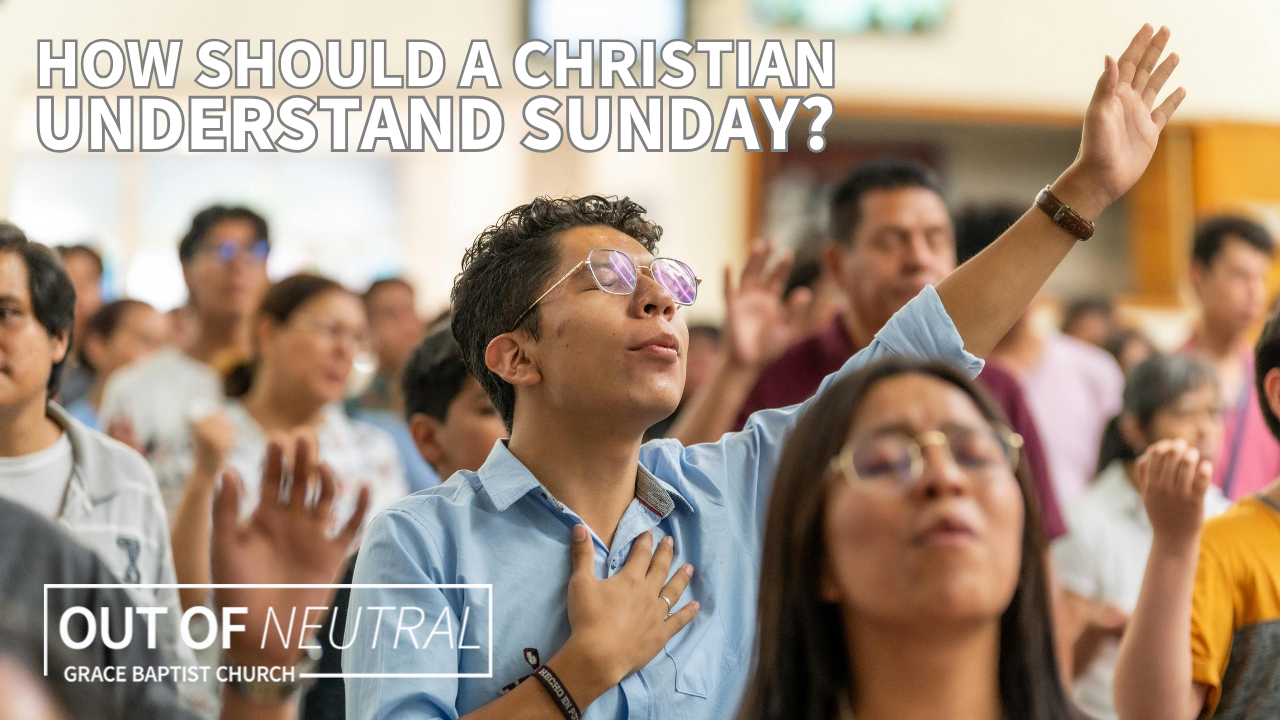
Many Christians grew up with a clear vision of what Sunday was all about. Morning and evening worship services bracketed a day that was often defined by what you couldn’t do: no shopping, no sports, no homework. Naps, fellowship, and Christian reading often filled their place. Today, people are quick to criticize the legalistic vision of the past but have often failed to replace it with anything else. How should a Christian understand Sunday, and what, if anything, makes it different from every other day?
Sunday = the Christian Sabbath View
During the Reformation, there was a movement to re-evaluate Sunday. The medieval church had mandated church attendance and prohibited any manual labour that interfered with it, but festivals, sports, and markets were common during the rest of the day. Although Calvin didn’t equate Sunday with the Sabbath in the later Puritan sense, much of the Reformed tradition that followed developed in that direction.
They pointed to the fact that God Himself rested one day in seven (Genesis 2:2) and, in so doing, established a day of rest as a “law of nature.” They also argued that the moral commands of the Mosaic covenant are still binding, and so Christians are obligated to “Remember the Sabbath” and “to keep it holy” (Exodus 20:8). Believers not only attend church on Sunday, but they finish any work and prepare for Sunday, so that the entire day can be devoted to God and His people with exceptions only for works of necessity and mercy. The Westminster Confession and the London Baptist Confession of Faith both enshrined this view.
Sunday = The Lord’s Day View
While seeing Sunday as the Sabbath is deeply embedded in many people’s consciences, the majority of Christians today are convinced that Scripture teaches otherwise.
For starters, the church never refers to the day of their gathering as “the Sabbath,” preferring instead the term, “the Lord’s Day” (Revelation 1:10), or just “the first day of the week” (Acts 20:7; 1 Corinthians 16:2). Additionally, if the Sabbath is a binding command, it’s curious that the early church chose to gather on the first day of the week, not the seventh. This hardly reflects God’s pattern in Genesis.
More importantly, the clearest New Testament teaching that directly addresses the Sabbath emphasizes freedom of conscience. Colossians 2:16 says, for instance, “Therefore let no one pass judgment on you in questions of food and drink, or with regard to a festival or a new moon or a Sabbath.” It would have been inconceivable for Moses to say this about the Sabbath.
Similarly, Romans 14:5 says, “One person esteems one day as better than another, while another esteems all days alike.” Paul seems to be seeking the unity of a church where Jewish Christians continued to observe the Sabbath while Gentile Christians did not. Instead of urging uniformity, he calls believers to be fully convinced in their own mind (Romans 14:5) and act in a way that honours the Lord (Romans 14:6) with the knowledge that “each of us will give an account of himself to God” (Romans 14:12). This sense of accountability seems to be missing today.
Sunday = My Day View
Far from being legalistic about what can and can’t be done on Sunday, many Christians today have no clear vision for the day at all. What was once structured around worship is now shaped by preference. In contrast to the example of the early church that gathered on the first day of the week, often at great personal cost, today, Sunday worship is often seen as just one option among others. The Lord’s Day doesn’t seem to belong to the Lord in any meaningful way anymore. This feels like a departure from Scripture and the pattern of the church.
The Fellowship Affirmation of Faith allows for the conviction of Sunday as Sabbath but only explicitly affirms the Lord’s Day connection with Jesus’ resurrection and Christian worship.
We believe that the first day of the week is the Lord’s day in honour of his glorious resurrection and is a particularly appropriate day for corporate worship.
Scripture may not bind every Christian to a Sabbatarian framework, but it does call us to recognize that this day uniquely belongs to the risen Lord. How do you honour the Lord on the Lord’s Day? In what sense do you see it uniquely belonging to Him?
In awe of Him,
Paul