It’s easy to keep doing the same things without thinking about what you’re doing. That’s not a recipe for personal growth, though. This week, I’m taking a course called “Preaching the Narratives of Scripture.” There were a couple of books that I had to read in preparation as well as papers to write, summarizing their contents and my reflection on them. On Wednesday and Thursday, I’ll take in day-long lectures with the instructor, Kent Edwards, who will come to us from California by Zoom video call. On Friday, I’ll preach to my computer screen and then have the professor, and fellow pastor-students analyze and critique everything I’ve said and done. Pray for me! In the follow-up to the course, I’ll submit another three sermons for written feedback from the others and in turn, evaluate the strengths and weaknesses of the other participants. Having gone through the same process for the course I took in the winter, “Preaching Old Testament Poetry,” I know the value (and the stress!) of the feedback and reflection. You can’t grow in the echo chamber. Let me share some of the lessons I’ve learned so far.
The actor, Jared Leto, recently emerged from a silent meditation camp only to learn that COVID-19 had become a global pandemic. After close to two weeks in a desert retreat, it was a shock for him to learn what had happened while he had been unplugged. With the constant barrage of troubling news reports and alarming developments, escaping to a desert hideaway may sound tempting. Meditation sounds like it may help deal with the uneasiness that many people are feeling. But does the Bible say anything about meditation? Is meditation Christian? And, if so, is it any different than Hindu and Buddhist forms of meditation?
I remember a woman in one of my Bible studies in Japan who approached me, puzzled, one day. She said, “I don’t know what to do with the Bible. It contains stories that are so remarkable that they can’t be true. But it’s not written like any of our legends or myths. It reads like a collection of eye-witness accounts and historical records. How am I supposed to read it?” She was actually asking a very profound question. Whether people read the Bible or reject it, they often do so without considering what the Bible says about what kind of book it is. The Bible makes the following five claims about itself.
On Sunday, we started a new series in 1 Thessalonians entitled, “Living Life in Light of the End.” I’ll be away camping with my family this week so instead of my regular post, I want to encourage you to watch this video overview of 1 Thessalonians from The Bible Project. I hope it gives you a better feel for the letter. I’ll be back on Sunday for a look at 1 Thessalonians 2:1-6.
At this week’s FEB Central Regional Conference, Mike Bullmore gave an exposition of the longest chapter in the Bible, Psalm 119. His teaching did what all good teaching should do: move me to look closer at the Bible. The result was four questions to help get more out of Bible reading. Reading the Bible is not only one of the most important things a Christian can do to grow, it’s also for many one of the most difficult things to do. Psalm 119 provides some help.
I’m not a Jew. But I do love the Jewish Scriptures. And I believe they contain a compelling reason to read what Christians call the New Testament, and it’s a reason that’s often overlooked.
If you want to avoid becoming self-righteous, you need to read the Bible through two lenses.
For the last twenty weeks, we’ve been going through the e100 Bible reading challenge from Scripture Union. Many people have shared that it’s helped them to get into God’s Word and grow in their faith. The book is great, but having finished the book, I don’t think people need another book. In my mind, there are three ingredients that make the e100 challenge so powerful and it’s those three ingredients that I would commend to people for a lifetime of Bible reading.
Psalms is quoted in the New Testament more than any other Old Testament book. Obviously, it has much to offer. Have you ever thought about how it’s put together? With 150 psalms, you could be forgiven for not being aware of the structure of the book. Have you ever noticed, for example, that the Book of Psalms is actually made up of five books (Psalms 1-41; 42-72; 73-89; 90-106; 107-150) that most scholars believe are related to the five book of Moses? So just as we have five books of Moses to read, we have five books of Psalms to pray and sing. This is minor, though. Missing the forest for the trees in the Psalms is far more problematic in other ways because it teaches some crucial lessons about how to approach life and what to expect from it.
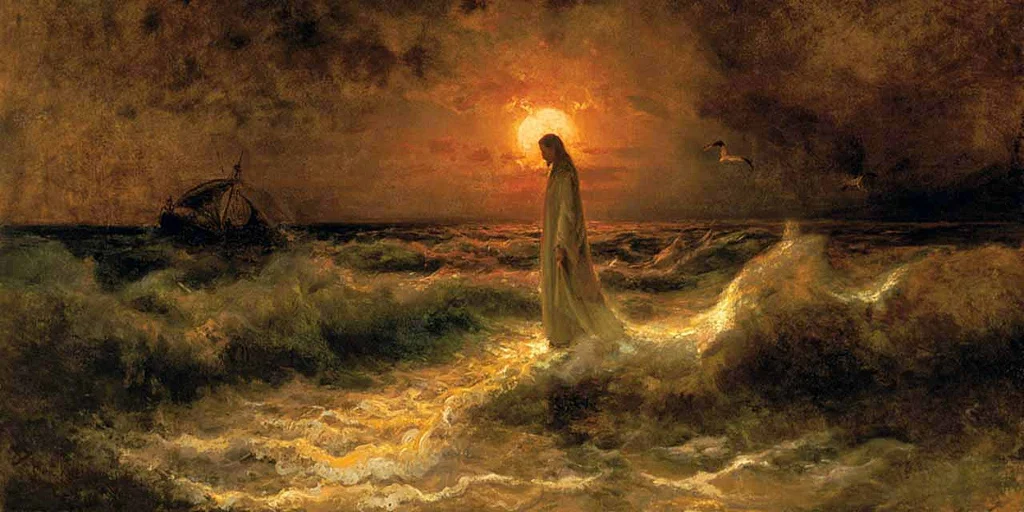
Sometimes, it feels like the people in biblical times had an inside scoop on faith and spirituality. We imagine that walking with Jesus and witnessing the events of his life, firsthand, would make us feel closer to Him. Yet often those people we envy are anything but models of faith. The disciples, for instance, astound us with their confusion, resistance, and lack of trust. There’s an important reason why. We need revelation more than we need experience. Take the episode of Jesus walking on the water. If we were there, it would have been memorable. But we may not have heard everything. We may not have understood everything. And even if we saw and heard everything, we may not have known what to make of it. We have something better than a view of this event, sitting by the 1st c. Sea of Galilee. We have revelation. God has given us in the gospels perfect accounts, not only recording the necessary historical details but giving us an authoritative interpretation of what we’re supposed to learn from them. Understanding this helps us to know how to read them.