I wrote last week about whether a person can lose their salvation. What we learned was that the Bible addresses the question with far more complexity than we do. Today, I want to address a related but slightly different question, “What do I do if I’m worried that God won’t forgive me or save me?” Maybe you’ve put your trust in Jesus and prayed for forgiveness, but you’ve done things that make you doubt. Or you’ve become worried about the future. You fear coming to the end of your life only to find out that you’re one of the people of whom Jesus says, “I never knew you; depart from me,” (Matthew 7:23). The following are four questions you can ask when you find yourself in that position.
A while ago, a well-known Christian author and former pastor announced that he was no longer a Christian. Many of you have read at least one of his books. He wasn’t one of those preachers that makes people cringe when he opens his mouth. He was a thoughtful, conservative evangelical. But is no longer. I think his announcement raises some important issues for all of us.
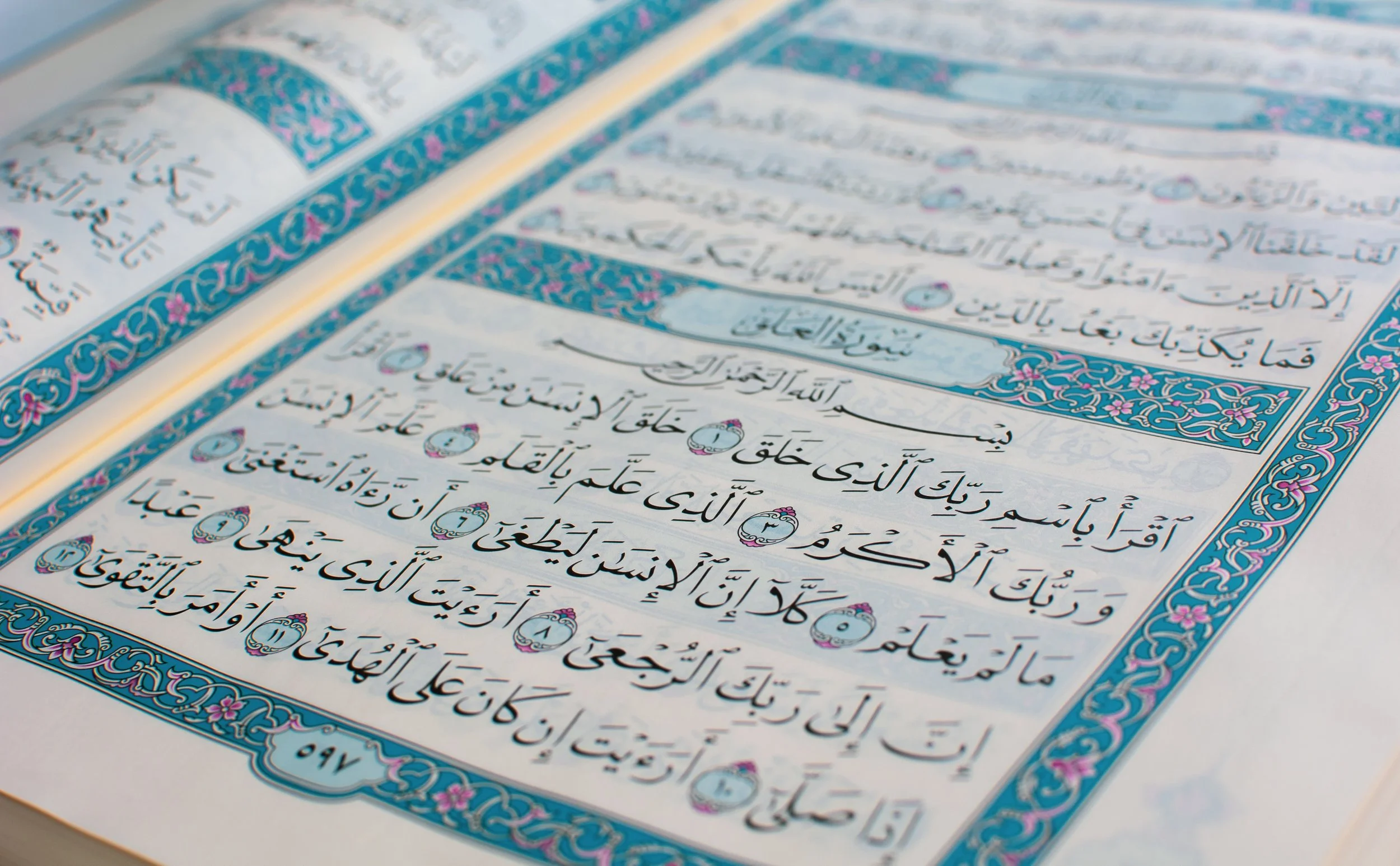
I shared last week about some of the lessons I learned at Dr. Gendi’s, “How to Love Your Muslim Neighbour Seminar.” One of the things that really helped was being walked through what the Qur’an teaches about Jesus. While I knew that the Qur’an holds Jesus in high regard, I was not prepared for how much it describes of His life. Most Christians would be surprised to learn all that it says about Him. Even still, it is just as significant what it doesn’t say about Jesus. Let me share with you what I learned.
Talk about the Trinity often makes Jews and Muslims feel uncomfortable because it sounds as if Christians believe in three gods. And many Christians themselves don’t have a clear sense of how God could be both three and one. Let me offer this beginner’s guide to the Trinity.
Over the last number of weeks, we have been looking at John 6. Just one day after the feeding of the 5000, the crowds became offended at Jesus’ teaching and largely walked away, never to return. They grumbled about Him, argued with Him, and ultimately decided that they knew better than Jesus did. Their final recorded words, “This is a hard saying; who can listen to it” (John 6:60), stand as a warning to all who would reject Jesus because they’re offended at what He says. While few Christians today are offended by Jesus’ claims to be the “bread of life” (v. 35) or the “bread that came down from heaven” (v. 41), many are offended by another teaching of Jesus in this same passage. The teaching that people find so offensive, today, is the idea that no one trusts in Jesus unless God enables them to do so. Let’s look at the text again and see if that’s what it really says.
The shortest summary of the gospel I know is “God made it. We broke it. Jesus fixed it. By faith I receive it.” Each of these statements tries to summarize an important part of the good news announcement of the gospel. Even more basic are the four words: “God. We. Jesus. Me.”
Today's post is by guest contributor, Christian Clement-Schlimm. Because it's the 500th anniversary of the Reformation, and because of Christian's background in history, I've asked him to share what Luther might think of the Roman Catholic Church, as it exists today.
Although I grew up with Roman Catholic friends and family, it wasn’t until I began university that I started to have serious theological conversations with Roman Catholics of conviction. These would include Roman Catholic seminarians, converts from Evangelicalism to Roman Catholicism, and people who frankly knew their stuff. We would discuss the nature of the sacraments and the positions of the early church, but it would always come back to the issues of the Reformation. One hard conversation I had took place with a Roman Catholic friend who was considering which Roman Catholic monastic order to join. At the same time he was struggling with critical points raised by Protestantism. The conversation ended when he basically asked, “Why can’t Roman Catholics and Protestants just get along? We’re all serving Christ after all.” I think many people struggle at this point. They know that there are differences between Roman Catholicism and Protestantism but they’re not sure how significant those differences are. What my friend didn’t seem to realize was that our differences were at the heart of our faith. We need to get along, but that doesn’t mean pretending that we’re the same or that our differences don’t matter. Let me explain.
Today's post is by guest contributor, Christian Clement-Schlimm. Because it's the 500th anniversary of the Reformation, and because of Christian's background in history, I've asked him to share what the Reformation was and what it means for us today.
Growing up I often faced the question, “What’s the difference between Catholic and Christian?” This was not because I was engaging in deep theological study of religious topics, but rather because from grades 3 to 12 I attended Catholic schools and identified myself as a Christian. While my answers to this question changed as I began to understand more aspects of our Christian faith and the faith of my Roman Catholic friends and family, it was a question constantly asked as the other kids noticed a difference. Due to my parent’s discipleship and Sunday School training, I would noticeably excel in the required religion classes which largely focussed on the Ten Commandments and the Beatitudes. On the other hand, I would not participate when the class would spend months learning the Hail Mary prayer in Italian or receive communion during the Masses run by the school priest. In university, the question would still be asked but the context would change. At the University of Toronto, I attended the Roman Catholic college, whose chancellor also happened to be the Roman Catholic Archbishop of Toronto. While, to my memory, the Reformation was never mentioned in my days of grade school, at school or church, it would be one of several central topics when speaking with Roman Catholic friends and classmates on campus, especially those in my history program. It was during this time that I came to fully understand what was at stake and how an event now 500 years old was still supremely relevant to my attempts to share and defend my faith on campus.
Yesterday, I had my ordination council. It’s kind of like a bar exam for a pastor. It doesn’t make me a pastor but it licences me as one. Thankfully, after three hours of gruelling questions from a room full of visiting pastors, I was recommended for ordination and am now taking care of some of the paperwork toward finalizing everything. There will be an ordination service at Grace in the coming weeks. I was asked many questions about all kinds of areas of theology and pastoral ministry. There was one question that is often asked of candidates that didn’t come up though, “What is a baptist?” Could you answer that question?
Before my time, the 60’s boy band, the Monkees, recorded a song called Shades of Gray with the following words: “But today there is no day or night; Today there is no dark or light; Today there is no black or white; Only shades of gray.” If they thought there were only shades of grey back in the 60’s, what would they say today? Surely, in our generation there is even more fuzziness in people’s thinking. On Sunday, we had the joy of celebrating a baptism. And later we looked at Revelation 20 and saw that two books will decide the fate of all people. While I didn’t plan to connect that passage with the baptism, ever since I’ve been thinking about the relationship between them. What strikes me is how black and white they are to our world of grey.