It’s easy to conclude a person is hopeless to change. We often assume that people who aren’t like us would never listen to us. The story of Derek Black shows us, that’s not rue. If Derek could change, anyone can. And the steps that led to his transformation give us hints as to how we can be help effect change in our culture today.
The Ten Commandments are still a shorthand for many people in our culture to talk about the Bible. ‘I believe in the Ten Commandments,’ usually means that the person believes in what the Bible teaches about being a good person, without getting too bogged down with the details. Church-going Christians would claim a higher standard, but I’m not sure that our approach is all that much better. Quick question: can you name the first commandment, without peaking? And could you give some quick examples of how it shapes the way you live? While most people do fairly well with at least the surface level of commands not to murder and steal, I’m not convinced that we score so high with the first commandment. Take a moment to consider it with me.
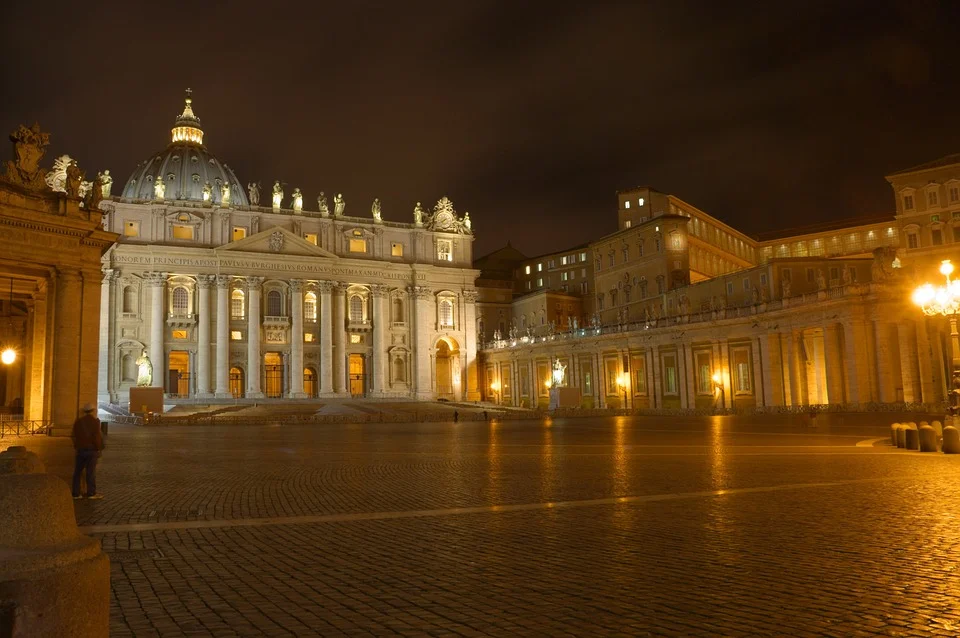
Today's post is by guest contributor, Christian Clement-Schlimm. Because it's the 500th anniversary of the Reformation, and because of Christian's background in history, I've asked him to share what Luther might think of the Roman Catholic Church, as it exists today.
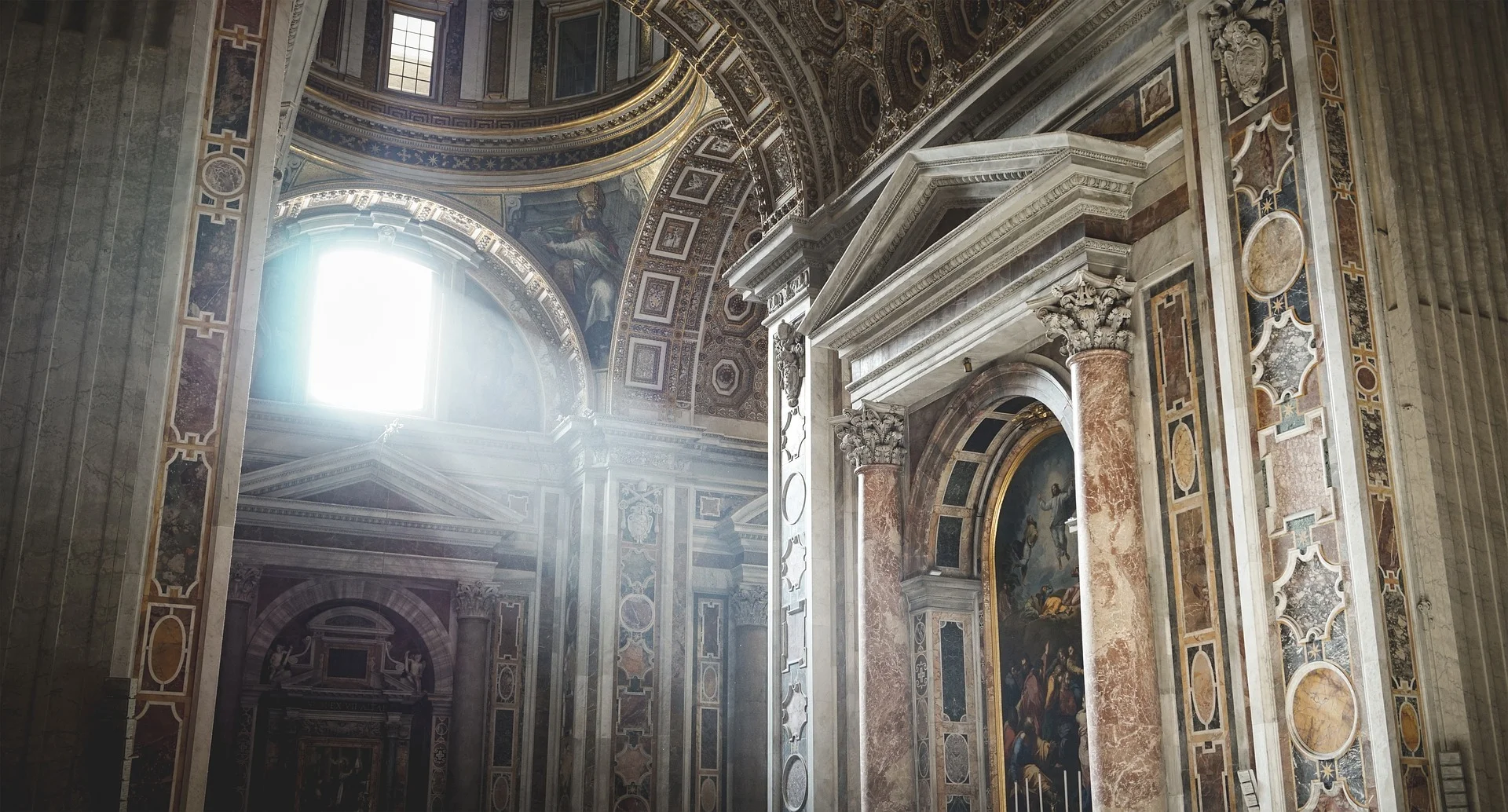
Although I grew up with Roman Catholic friends and family, it wasn’t until I began university that I started to have serious theological conversations with Roman Catholics of conviction. These would include Roman Catholic seminarians, converts from Evangelicalism to Roman Catholicism, and people who frankly knew their stuff. We would discuss the nature of the sacraments and the positions of the early church, but it would always come back to the issues of the Reformation. One hard conversation I had took place with a Roman Catholic friend who was considering which Roman Catholic monastic order to join. At the same time he was struggling with critical points raised by Protestantism. The conversation ended when he basically asked, “Why can’t Roman Catholics and Protestants just get along? We’re all serving Christ after all.” I think many people struggle at this point. They know that there are differences between Roman Catholicism and Protestantism but they’re not sure how significant those differences are. What my friend didn’t seem to realize was that our differences were at the heart of our faith. We need to get along, but that doesn’t mean pretending that we’re the same or that our differences don’t matter. Let me explain.
Recent events have shown again that racism is still a major problem in North American culture. It’s bigger than the headlines and more persistent than the latest government policy decision designed to address it. North America has experienced revivals and awakenings but racism is alive and well. At many times, the church has been more a part of the problem than the solution. What can be done? I certainly don’t have the answers but I find several important lessons in how the early church faced its own crisis of prejudice and discrimination.
On January 24, 1975, the world-renowned pianist Keith Jarrett was scheduled to play at the Cologne Opera House. Jarrett had requested the use of a Bösendorfer 290 Imperial concert grand piano for his performance but there was a mix-up and the opera house staff instead found a smaller Bösendorfer backstage, a smaller baby grand piano used for rehearsals, and set it up on the stage. According to the concert organizer, the substitute piano "was completely out of tune, the black notes in the middle didn't work, the pedals stuck. It was unplayable." Jarrett made the decision to continue with the concert anyway. A recording of that concert entitled, The Köln Concert, was released later that year and went on to become the best-selling solo album in jazz history, and the all-time best-selling piano album. Great talent under the tension of incredible adversity had created musical magic. It made me think of the many times when plans have failed, preparation gets interrupted, or health problems play havoc with my life or the life of someone I care for. Our men’s canoe trip this weekend was plagued by treacherous winds as we canoed, rain and dampness as we camped, and more mosquitoes than I’ve ever experienced before. We prayed for God to take the trials away – and that was good and appropriate. But The Köln Concert and the Scriptures remind me that there are other things to pray for.
Today's post is by guest contributor, Christian Clement-Schlimm. Because it's the 500th anniversary of the Reformation, and because of Christian's background in history, I've asked him to share what the Reformation was and what it means for us today.
Growing up I often faced the question, “What’s the difference between Catholic and Christian?” This was not because I was engaging in deep theological study of religious topics, but rather because from grades 3 to 12 I attended Catholic schools and identified myself as a Christian. While my answers to this question changed as I began to understand more aspects of our Christian faith and the faith of my Roman Catholic friends and family, it was a question constantly asked as the other kids noticed a difference. Due to my parent’s discipleship and Sunday School training, I would noticeably excel in the required religion classes which largely focussed on the Ten Commandments and the Beatitudes. On the other hand, I would not participate when the class would spend months learning the Hail Mary prayer in Italian or receive communion during the Masses run by the school priest. In university, the question would still be asked but the context would change. At the University of Toronto, I attended the Roman Catholic college, whose chancellor also happened to be the Roman Catholic Archbishop of Toronto. While, to my memory, the Reformation was never mentioned in my days of grade school, at school or church, it would be one of several central topics when speaking with Roman Catholic friends and classmates on campus, especially those in my history program. It was during this time that I came to fully understand what was at stake and how an event now 500 years old was still supremely relevant to my attempts to share and defend my faith on campus.
It’s easy to get confused about prayer. When I first began to pray as a university student, I started to pray enthusiastically about everything. The idea that God hears my prayers was exciting. I prayed readily but not always discerningly. I didn’t give much thought to God’s will or it’s role in prayer. And so when God didn’t give me what I wanted, I was left confused. Then as I began to study more and learned that God knows what I need before I even ask Him (Matthew 6:8), I started to wonder whether prayer was so important after all. Am I just telling God things He already knows? Then when I learned that God hears prayer that is “according to his will” (1 John 5:14), my prayer life took another hit. How do I know what God’s will is anyway? And if He only answers prayers that are according to His will, is there any point in praying at all? Thankfully, I was never brought to total despair. And chances are you haven’t been either. But without a clear understanding of prayer, it’s easy for our prayer life to lose steam over time. Here are 7 reasons to pray when you find that happening in your life.
This week I read Jonathon Seidl's struggle to admit something. He refers to it as his “secret.” And when you hear his anguish in confessing it, you might think he’s admitting to an unsolved crime or an illicit affair. His big secret is the fact that he’s been diagnosed with anxiety and OCD. Before getting help, he would regularly re-read e-mails upwards of 50 times, convinced that there was an error he was missing or a tone that he needed to correct. He would lie in bed convinced that he had forgotten to lock his truck. And in cleaning the house with his wife, he would get annoyed if things weren’t done in a certain order: “The floor before the dishes!” He would often tell himself, “This isn’t a big deal,” but he couldn’t let go of the fact that it was a big deal to him. Admitting what was going on inside him and getting treatment for it, was a significant turning point in his life. Unfortunately, being a Christian actually made that more difficult for him than the average person.
As marriage rates drop and singleness rises, Christians face new challenges in dating and contentment. This post explores the insights of a 7,000-person survey and offers biblical encouragement to those navigating singleness and God’s plan for their future.
Yesterday we attended Evan’s graduation and celebrated this milestone in his life. Young people from a variety of backgrounds were all full of hope and plans for the future. It’s usually a time preceded by searching as students try to choose a path. The choices they make will shape a large part of their future. But students aren’t the only ones who have to make important decisions. How do you make decisions about where you’ll live, what car you’ll buy, or how you’ll spend your summer? Some decisions are easy; other far more difficult. Over the years, four questions have guided my decision making and helped me to try to discern what to do when I’ve felt stuck. But the questions need to be asked and considered in order because different issues are more important and more clear than others.