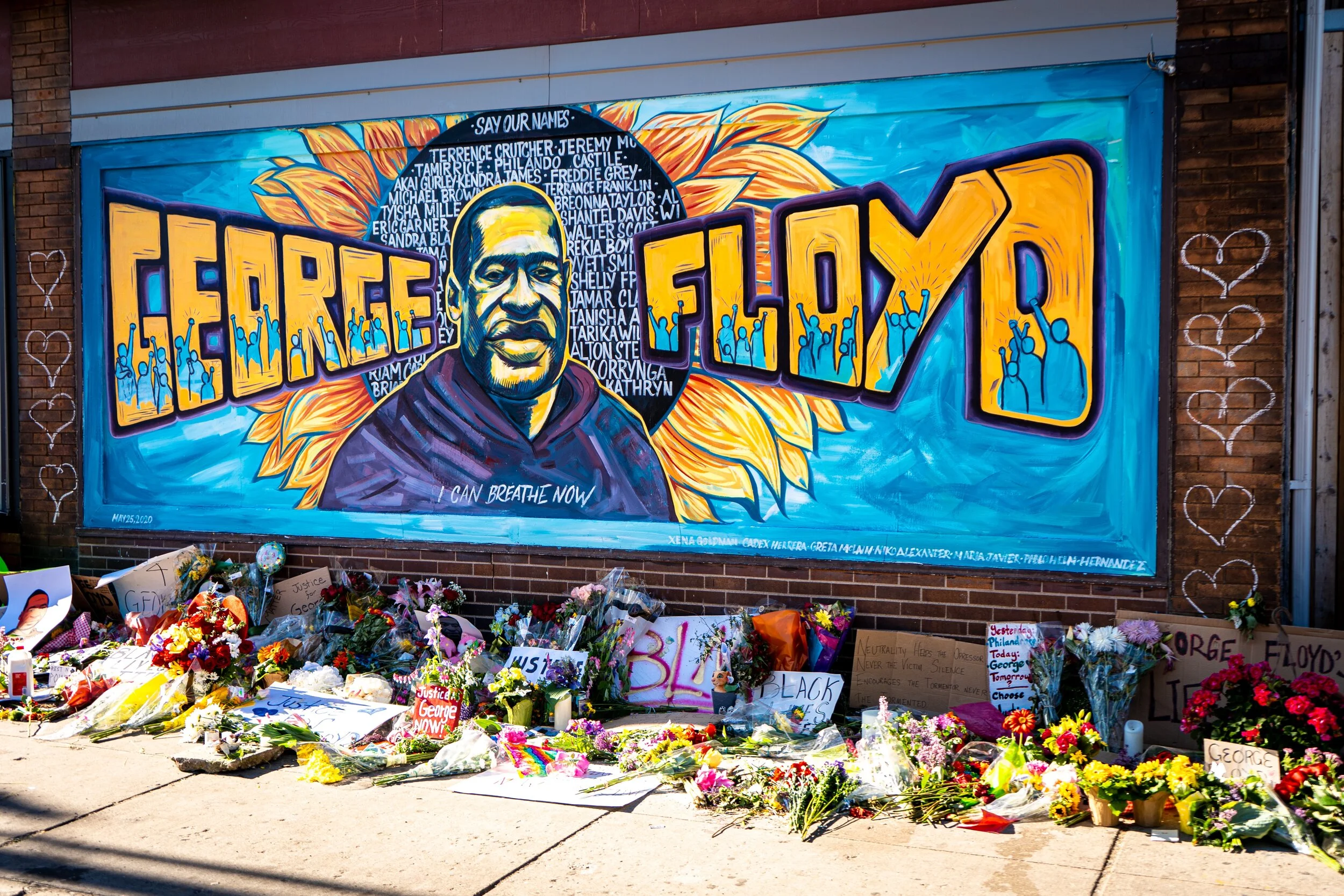
Like most people, I have spent the last week trying to process my anger and frustration at the murder of George Floyd. Feelings often point to questions but seldom give the answers. And the lack of answers has only compounded the frustration. Why does this keep happening? When will we change? Why can’t we do better? It would be a lot easier if this was just a police problem or an American problem, but viewing another senseless death through those lenses won’t likely get us any closer to an answer. I have to come to terms with the fact that this is my problem.
Numb from the news coverage that fuels more despair than it resolves, last night we watched, The Eye of the Storm, as a family. It’s a 1970s documentary about a third-grade teacher named Jane Elliott who, in the wake of the assassination of Martin Luther King Jr, tried to help her class of white students feel the impact of racism. Then we listened to accounts of people of African descent tell their stories of discrimination. And we prayed. I’m not qualified to speak to all of the changes that need to take place in our society if we are to deal with racism and take Jesus’ command seriously to love our neighbour. But I offer up the following as a sample prayer that I hope will guide our family’s response in the days to come.
It’s easy to keep doing the same things without thinking about what you’re doing. That’s not a recipe for personal growth, though. This week, I’m taking a course called “Preaching the Narratives of Scripture.” There were a couple of books that I had to read in preparation as well as papers to write, summarizing their contents and my reflection on them. On Wednesday and Thursday, I’ll take in day-long lectures with the instructor, Kent Edwards, who will come to us from California by Zoom video call. On Friday, I’ll preach to my computer screen and then have the professor, and fellow pastor-students analyze and critique everything I’ve said and done. Pray for me! In the follow-up to the course, I’ll submit another three sermons for written feedback from the others and in turn, evaluate the strengths and weaknesses of the other participants. Having gone through the same process for the course I took in the winter, “Preaching Old Testament Poetry,” I know the value (and the stress!) of the feedback and reflection. You can’t grow in the echo chamber. Let me share some of the lessons I’ve learned so far.
While a lot of attention has rightly been focused on the physical dangers of the COVID-19 virus and the economic impact of social distancing, more and more people are discussing its influence on our mental health. Anxiety, stress, fatigue and depression are a reality for many people in the midst of this pandemic. Perhaps you’re feeling some of these symptoms for the first time or maybe you’re finding that COVID-19 has exasperated what you were already feeling. I’d like to share where I believe the Bible intersects with COVID-19 and our mental health.
What if a classic novel could help you see the message of the Bible more clearly? One unforgettable story by Charles Dickens opened my eyes to understand Jesus in a way I didn’t expect.
We all have things we know we should think about but keep putting off. Some of them don’t matter much in the long run, but others have lasting consequences. What if the thing you’re avoiding now is the most important of all?
A visit to a Japanese home taught me something surprising about heaven. Just as a host sets the rules for entering their house, God sets the terms for entering His kingdom. Jesus’ parable of the wedding feast reveals what keeps people out.
When tragedy strikes, we ask tough questions: Does God care? Why does suffering exist? The story of Adam and Eve in Genesis provides deep answers, revealing God's love, the deception of sin, and His ultimate plan to restore what was lost.
If you were to draw close to Jesus, how do you think He would change you? There was a time when I would have answered that question very differently. I figured He would rob my fun. I feared He would be controlling. I worried that He would come with guilt and pressure. Instead, what I came to experience was rest. One of the first verses of the Bible that I ever read was Jesus’ invitation to rest in Matthew 11:28-30.
Come to me, all who labor and are heavy laden, and I will give you rest. Take my yoke upon you, and learn from me, for I am gentle and lowly in heart, and you will find rest for your souls. For my yoke is easy, and my burden is light.
At first, I didn’t understand how this promise worked or whether it was true. But it was one of those statements that was so bold that it was either false and put Jesus on the level of a con artist, or it was true and shattered everything I assumed about who Jesus really was. I’d like to share what I’ve come to experience of the truth of Jesus’ invitation.
Last time, we looked at some of the resources that are available to help busy parents encourage the faith of their children while they’re home from school with too much time on their hands. Pouring Scripture into your children gives them a foundation to begin thinking biblically about life and the world around them. But we also need to talk to them about the crisis itself. Chances are that some of your children may feel that COVID-19 is more of an annoyance than a crisis right now. Until you’re actually faced with the physical or economic pain of the pandemic, it may just feel like an inconvenience. Now is the time to prepare for when your family may feel that pain a little more personally. I was reflecting on how we talked with our own children about the earthquake and resulting nuclear meltdown in Japan when I came across an excellent article by Sandy Galea giving 7 Tips When Talking To Kids About Coronavirus. Let me share some of the things I learned from her article and illustrate how we saw them play out in what we experienced.
These are not easy days to be a parent of young children. Having kids home for summer holidays can be difficult enough to plan for, but the COVID-19 school closures were too sudden to allow for planning and there are no camps to send them to or programs to enrol them in. Educators are doing what they can to provide online learning options and, as a church, we’re working to launch an online children’s ministry for our families. But still, many parents see this time as an opportunity to invest in their children’s faith and discipleship and are looking for tools and resources to help. The best place to start is the Bible itself. There’s nothing that can replace reading the Bible to your children and helping them to read it for themselves. You want to make sure that your children’s Bibles are well worn. But as you do that, you may want to supplement the Bible reading. Let me share what I feel are some of the best free materials available right now to encourage your child’s spiritual growth.