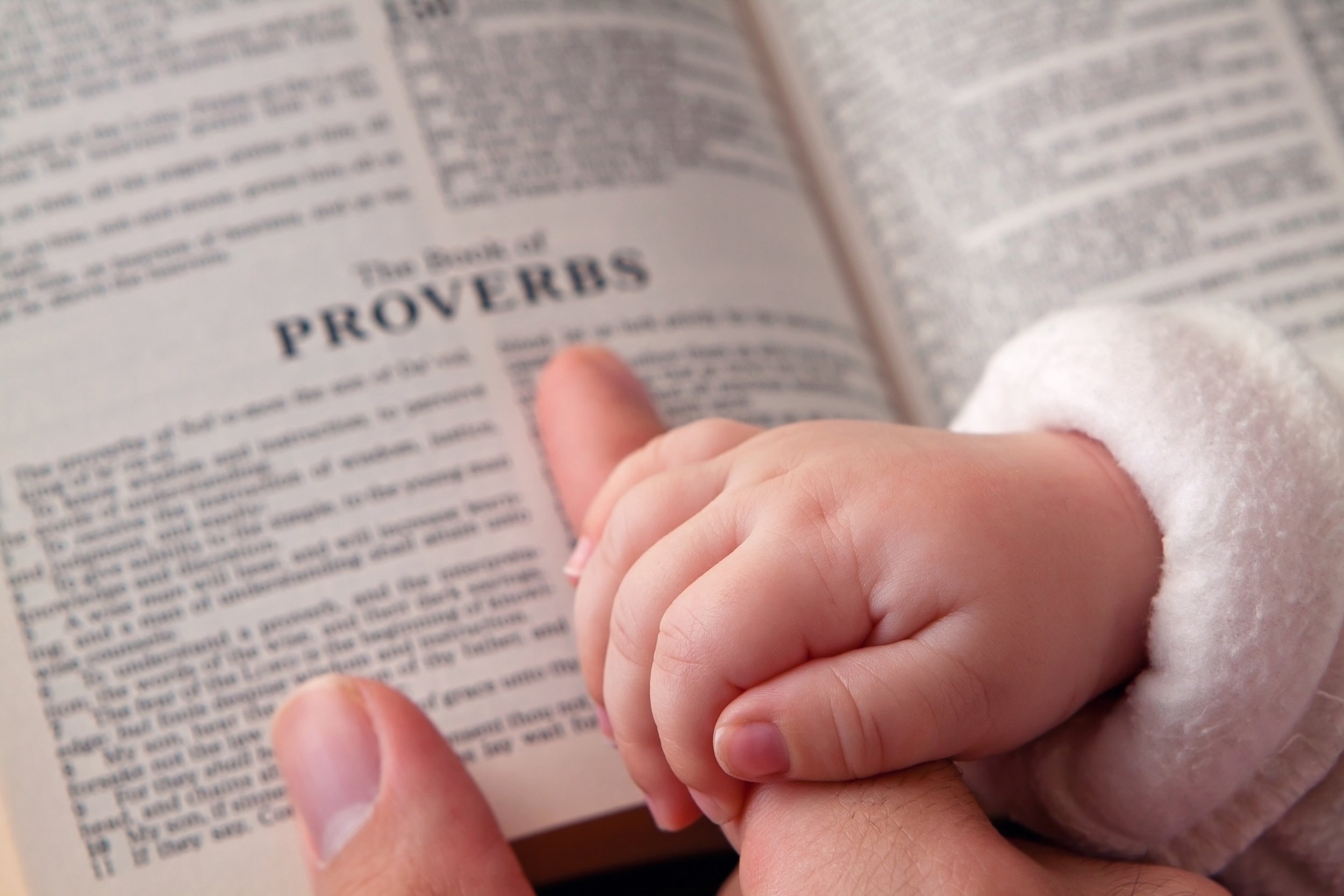


Out of the blue, a church member said to me, “I feel the attraction of Catholicism. The idea of praying to Mary would be a lot easier for me than praying to a God called ‘Father.’” She went on to share how severe her own father had been and how he died when she was still in her early teens. He had left her with scars, and they got in the way of her relationship with God. While her situation was unique, many people experience a similar struggle. Overcoming this involves several deliberate steps. Consider these four.
1. Reflect on the fact that you have been adopted into a new family
When Jesus taught His disciples to pray, He started with “Our Father in heaven, hallowed be your name” (Matthew 6:9). When we call God “Father,” we’re not just using a name that’s convenient; it’s one that we’re to reverence. There’s something important about the names of God because they reveal who He is and what He’s like.
“Father” not only expresses something important about God’s relationship with Jesus, but it also reminds us of our adoption into a new family. Galatians 4:4-5 teaches that “God sent forth his Son, born of woman, born under the law, to redeem those who were under the law, so that we might receive adoption as sons.” God’s mission in sending Jesus can be seen as a Father going to great lengths to adopt children.
When your own father’s influence in your life has been painful, your adoption is an important truth that requires reflection. God chose you to be a part of His family. In love, He became the Father you may not have experienced. You now have an eternal family that will be perfected in glory.
2. Give thanks for the many gifts He’s given you
People often try to think about God as their newly adopted Father, but make the mistake of trying to interpret Him primarily through their circumstances. God is most clearly revealed through His Word. Passages like Ephesians 1:3-14 give rich descriptions of all that God has done for us. Meditating and maybe even memorizing these passages can help to reshape an understanding of a Father who is loving, generous, and good.
Someone who grieves all that their earthly father failed to provide can come to see their heavenly Father as the one “who has blessed us in Christ with every spiritual blessing in the heavenly places” (Ephesians 1:3).
Someone whose earthly father related to them with only selfishness and expectations can come to see their heavenly Father as one who paid the ultimate price to redeem us (Ephesians 1:7).
Someone whose earthly father was characterized by judgment can begin to rejoice in “the riches of his grace, which [the Father] lavished upon us, in all wisdom and insight” (Ephesians 1:8). That means that God not only treats us with grace, but He does so in a way that is discerning and helpful to our growth.
And finally, the person whose earthly Father always left them questioning where they stood can find assurance in a heavenly Father who gives us in the Holy Spirit a down-payment or “guarantee of our inheritance until we acquire possession of it” (Ephesians 1:13-14).
3. Look around at the Father’s care for His creation and know that He cares for you more
Thinking deeply about Scripture helps change how we think about our heavenly Father, but Jesus also encouraged us to look at the birds and the flowers around us. As you look at your garden or as you stroll through a park, you have an opportunity to reflect on God’s tender care of even the least of all He has made.
Jesus knew that we have a tendency to exclude ourselves from statements of God’s blessings. We think to ourselves, “That promise is probably for people who are more faithful than me.” So Jesus pointed to creatures that neither strive nor perform to show us it isn’t about measuring up. In Matthew 6:26, He said, “Look at the birds of the air: they neither sow nor reap nor gather into barns, and yet your heavenly Father feeds them. Are you not of more value than they?” We’re to read passages like this and say, “Yes, I really am valuable to God.”
When words fail us, it can be helpful to borrow language that has been shaped by Scripture and tested by the church. The Fellowship Affirmation of Faith describes God the Father as follows:
We believe in God the Father, neither begotten nor proceeding, who, in his perfect love, reigns with providential care over all creation, accomplishes his will, and protects and preserves his children whom he redeems and adopts into his family as co-heirs with Christ.
That is the Father Jesus wants us to know and trust, even when our earthly experience of fatherhood makes that difficult.
Let the Scriptures reshape your understanding of the word “father” and fuel your love for your Father in heaven, even if you grieve the impact that your earthly father has had upon you.
In awe of Him,
Paul