For the final week of Black History Month, I wanted to introduce to you a man who was saved out of Islam and is now, among many other things, helping the church to share the Good News of the Gospel with Muslims. Thabiti Anyabwile grew up in North Carolina in the middle of the Bible belt but his family only attended church on special occasions. He never felt any strong desire for spiritual things until he was arrested in high school and had a wake-up call. He figured that church might be the place to go to get some sense knocked into you when you got in trouble, but when he went, he never ended up hearing the Good News.
Most people, myself included, see the world and small changes that might be made to better it. And we look on the surface at the issues that are nearest at hand. A true visionary, though, is someone who sees foundational problems and is able to envision and pursue profound solutions, regardless of their scale or the challenges they pose. Nigeria’s Byang Kato was a true Christian visionary.
The conviction that he was made in the image of God convinced him that he possessed an inherent dignity when others didn’t treat him with respect. And his belief that even his oppressors were made in the image of God, moved him to reject violent and vengeful tactics that others in his movement favoured as a response to their enemies.
While the Bible does use the word “marry” and “marriage,” rather than add an eleventh commandment, “Thou shalt have a wedding,” there is a commandment not to commit adultery. And you begin to realize that if it’s a sin to sleep with someone who’s not your husband or wife, then there must be some formal process to identify where a marriage begins and when it ends. In a world without weddings or marriage, you’d never have adultery. Because the lines were never formally drawn, it would be impossible to nail down when you’d actually crossed them. I think church membership is a little bit like marriage.
This morning I woke up listening to a podcast interview on marriage with Matt and Lauren Chandler. They’ve gained attention for their book on marriage entitled, “The Mingling of Souls,” and are promoting an upcoming conference that will be offered on-line in February. Several things stood out to me.
Our campus worker with Power to Change invited me to their year-end conference P2C+. I was busy with sermon preparation and other ministry with the short week, and so could only spare half a day on New Year’s Eve, but it was well worth the time. I’m not sure what I expected. There were probably 800 students gathered and it would have been easy to entertain them with light talks on hot topics. What I got instead was a hard-hitting morning on the theme of suffering.
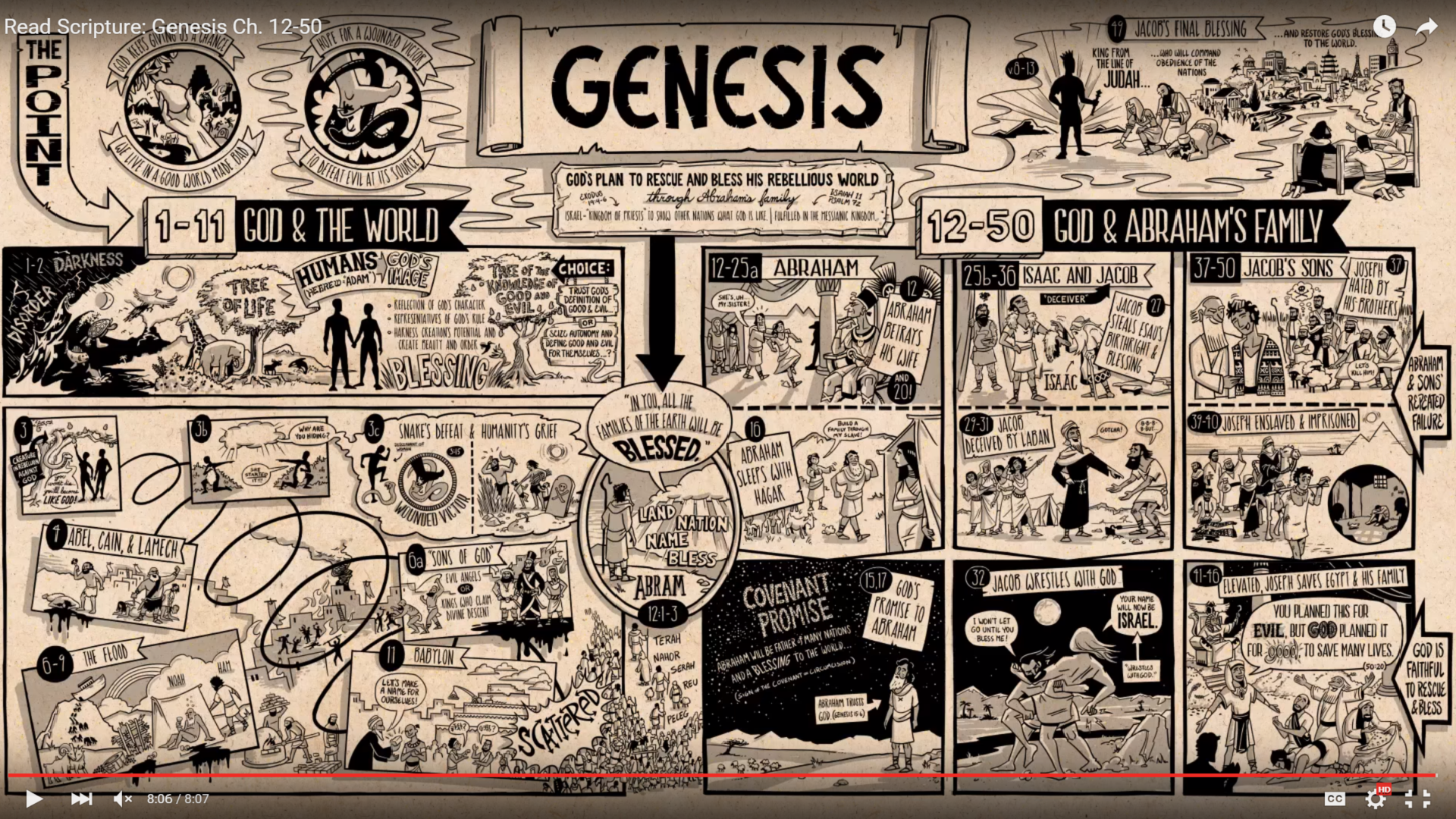
Last month I talked about the free Olive Tree Bible study app, the value of getting a current study Bible, as well as a new reading plan from the Bible Project with short YouTube videos introducing each book of the Bible. Seeing their two new videos on the book of Genesis this week I was amazed again at the insight these short clips contain. They helped me to see Jesus as the wounded Saviour in Genesis 3:15 and Noah as a second Adam in Genesis 6 who, like the first Adam, again gave in to temptation in a garden and ends up naked and ashamed in Genesis 9:20-23. Even their description of Genesis 12-50 as accounts of repeated human failure followed by expressions of God’s faithfulness in rescuing and blessing His people, climaxing with the theme of Genesis 50:20 that what people plan for evil is used by God for our good (Genesis 50:20) gives me a road map as I’ve been reading through these sections.
This week, GraceAnna Castleberry made waves with her article on “The Dior Woman and True Freedom.” She was commenting on the new commercial from perfume maker Christian Dior. In it, Natalie Portman stars as a runaway bride, who abandons the altar, casts off her white wedding dress, and runs in a black cocktail dress to a nearby cliff where a handsome man is waiting in a helicopter to fly her into the sunset and the “freedom” she craves. The clip is just over a minute long and so we’re left to interpret the details, but Castleberry has a healthy suspicion of its message. She says this:
“Have we really reached a point where freedom is portrayed by such petty play things like a little black dress, a helicopter ride, and a man to kiss but not commit to? Is freedom merely the absence of responsibility? If that’s the definition of freedom, I don’t want it. It has such an achy hollow feel it hurts.”
I was invited to a seminar on the life of Muhammad. In fact, a representative of the mosque had hand-delivered the invitation to the church. It was a reminder to me of the religious and cultural diversity of our city – and it impacts how we witness about Jesus. Let me explain how I responded to the invitation.
At Christmas, Christians usually warn each other about not getting caught up with the materialism of Christmas and instead encourage one another to focus on the Saviour. That's an important message. But I’d like to encourage you to consider buying yourself or someone you know a particular kind of present this Christmas. I want to encourage you to make an investment in your spiritual tool kit with a study Bible.