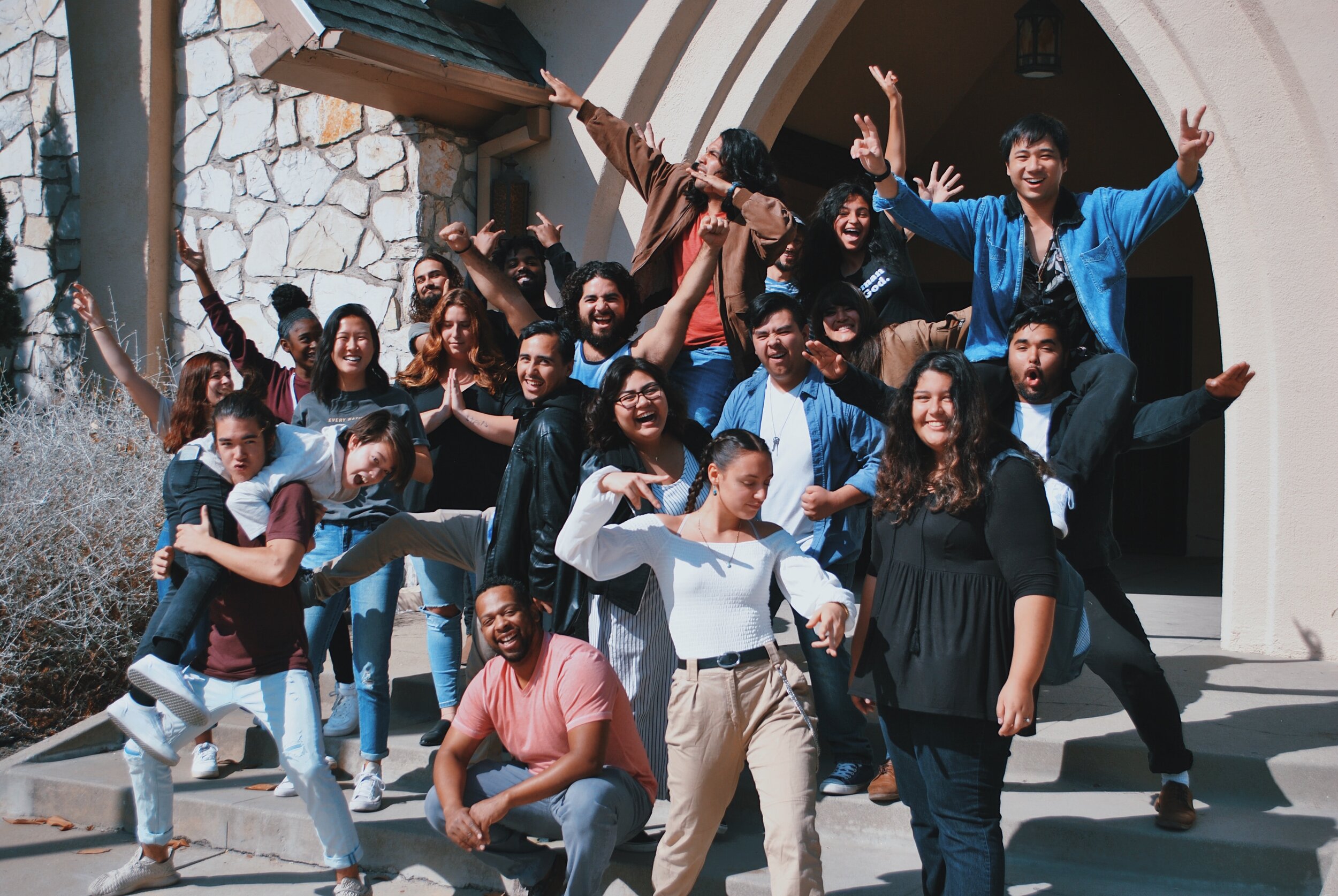
Have you ever wondered what it might be like to visit one of the earliest churches? If you stopped in on a service, I think you’d likely be disappointed. In fact, I doubt you’d ever go back. By our modern standards, everything would feel a little disorganized. It might not start on time and, if the apostle Paul was the preacher, there’s no telling when it might end. The worship music would probably strike you as a little amateur. Besides that, there would be no Sunday School, no youth group, no dedicated building, no bulletins, no PowerPoint, no sound system, and no sermon outline. You’d probably return from your visit, wondering how the early church grew at all. And yet, grow it did! The reason for the disconnect is that we often evaluate churches by their programs and externals, whereas the power of the early church wasn’t as easy to advertise. To experience the impact of the early church, you’d have to hang around longer than most people today are eager to. But if you did, you’d see that the heart of the church was in their community life and the quality of relationships they built together. One of the windows into early church life comes through the “one another” commands of the New Testament. By seeing what everyday believers were called to do to one another, we get a better picture of what we’re called to be as a church.
Last time, we looked at the earliest description of the church (Acts 2:42-47) and noted how they “devoted themselves to … the fellowship.” We said that it’s hard for us as Canadians because we love our privacy and our independence. I think it’s made even harder by the fact that we’re fuzzy on the word itself. I mentioned that I used to think that fellowship was just the Christian version of hanging out. Today, people use the word to describe a grant given to someone to do advanced studies (e.g. a research fellowship). We use the word to describe a loose association of people with a common interest or cause (e.g. The National Schizophrenia Fellowship). But none of these gets at the word that’s used in the Bible. Fellowship translates the Greek word koinonia. It was used to refer to friendships, partnerships and even marriages. The main idea always has the sense of active involvement in a relationship. Let’s look at what we can learn from how the word is used in Scripture.
We Canadians love our privacy and independence, don’t we? Maybe geography has something to do with it. Canada has just 4 people for every square kilometre of land, while many countries average thousands of people in the same space. Whatever it is, we guard our independence. We value privacy. We keep our distance. We struggle to get too close. Is there anything wrong with that? As long as we let Jesus in, do we have to let other people in, too? Let’s look at what the Bible says.
For many people, the process of becoming a church member feels hidden and obscure. So much so, that some people assume that they are members just because they’ve been attending a church for a certain period of time. On the other hand, there are people who think that they need to be invited to become members or achieve a certain ‘level’ before they’re deemed worthy. This is not the case. Let me explain why there is a formal membership process and what it consists of.
I’m old enough now to remember when the Lord’s Prayer was recited every morning in the public schools that I attended. Repeating those words every day influenced how I thought about God, to some extent, but it didn’t really teach me how to pray. If I recited a 10-line poem to my wife every day and that represented the sum total of our communication, I’m not sure we’d still be married! In the same way, just reciting the Lord’s Prayer isn’t how we speak to the God who invites into a relationship. Besides, right before teaching the disciples this prayer, Jesus warned them against mindlessly repeating empty phrases (Matthew 6:7), so it’s clear that mere repetition wasn’t His goal. The Lord’s Prayer doesn’t tell us what to pray so much as it teaches us how to pray. Let me share 3 ways it can do that.
Over time, things that initially shock us don’t anymore. I think something similar happens with the strangeness of baptism. It’s weird, right? If I asked you about your first day at work or your first time at a photography class and you said that they gathered everybody around to see all the new people dunked in a pool or a lake before they got started, I’d be pretty surprised. That would seem like a really strange company or club to me! So why have churches been doing that for the last 2,000 years? Let me give four reasons.
I’m taking a preaching course this fall with Bryan Chapell. For the last 20 years, he’s been a bit of a guru in the area of Christ-centred preaching. In his book, “Christ-Centered Sermons,” he asks a provocative question. “What is the primary reason that sin has power in our lives?” I wonder how you’d answer that question. I can almost hear people’s answers. “I don’t pray enough.” “I don’t read the Bible enough.” “I don’t try hard enough.” “I’m not disciplined enough.” Do you recognize your own answer yet? In one sense, those answers may be part of the reason why sin has power in our lives, but he argues that the ultimate answer is something else. At the risk of stating the obvious, he says that the ultimate reason that sin has power over us is that we love it. In fact, even if we say that we love Jesus, in the moment that we commit a sin, we love that sin more than we love Jesus.
In one sense the question of whether you should get baptized or not shouldn’t be a question. The fact is that baptism is commanded in Scripture. To ignore a command of God is a rejection of God’s will for your life. If there was anyone who might have been able to say, ‘I don’t think I need to do that,’ it would have been Jesus. When He came to John the Baptist to be baptized, He was refused at first. Understandably, John said that he should be baptized by Jesus instead! But in Matthew 3:15, Jesus answered him, “Let it be so now, for thus it is fitting for us to fulfill all righteousness.” Jesus’ baptism takes away all excuses. Baptism is a non-negotiable for anyone who wants to walk in the will of God. But the Bible actually gives conditions. There are three questions you should ask to see if you’re ready to be baptized.
When I was in university, I tried to tackle some of the Russian classics on my summer break. At first, I found the complexity of them overwhelming. The challenge was that they had so many characters and they all had multiple names and different people used different names to refer to each other depending on the nature of their relationship. I came to the conclusion that you need to be prepared to just spend the first hundred pages trying to figure out who everyone is and how they’re connected. Once you get past that, they’re fascinating stories. Those books showed me the importance of a reading strategy.
Bible reading is a little bit like weight loss, if you could pay someone to get the benefits from it, you probably would. Many people start off reading the Bible with excitement, but discouragement can set in. Most of us aren’t great readers, to begin with. And when we do read books, we usually aren’t reaching for ones that are 1,200 pages long and 2,000 years old! Our motivation for reading the Bible is that God is trying to speak to us through it. And that conviction alone is enough to get you started. But there are three ingredients that I've found to be important in helping someone maintain a regular habit of daily Bible reading. Let me share them with you.