The rate of change in our society continues to speed up, and there is both more information and more error in our world all the time. At a time like this, history can serve as an anchor and test of whether we have strayed from the truth.
The Apostles’ Creed is one of the oldest confessions of Christian faith and one of the three creeds that have been almost universally affirmed by all branches of the church for more than 1600 years. If someone tells you, Christians don’t agree about anything, point them to the Apostles’ Creed. You can recite it in less than a minute, but it gives a short summary of Christian belief that’s been used from the earliest times to disciple converts.
Let’s break down the three sections, each of which begins with a member of the Trinity.
Section 1 introduces us to the nature of God
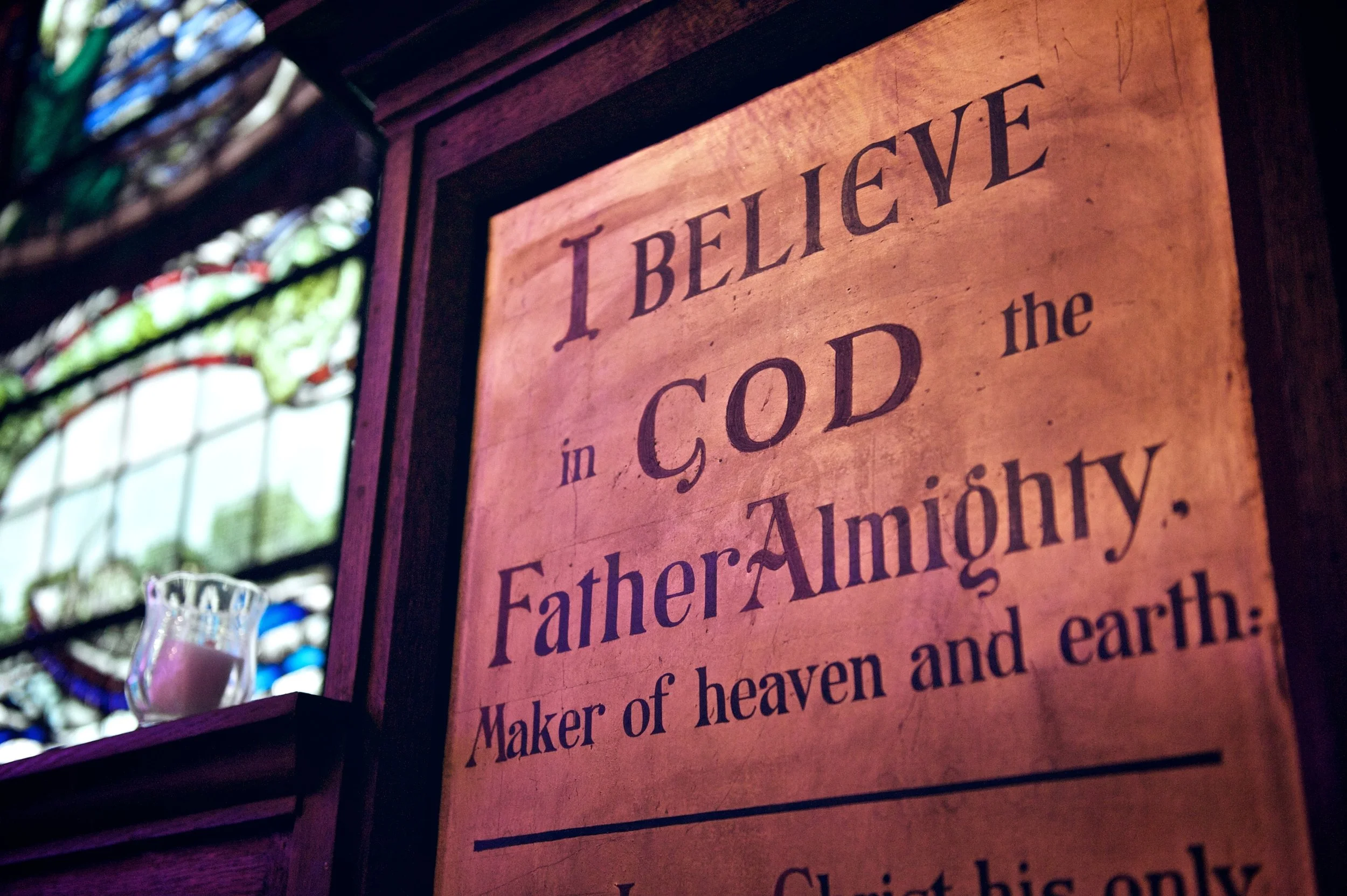
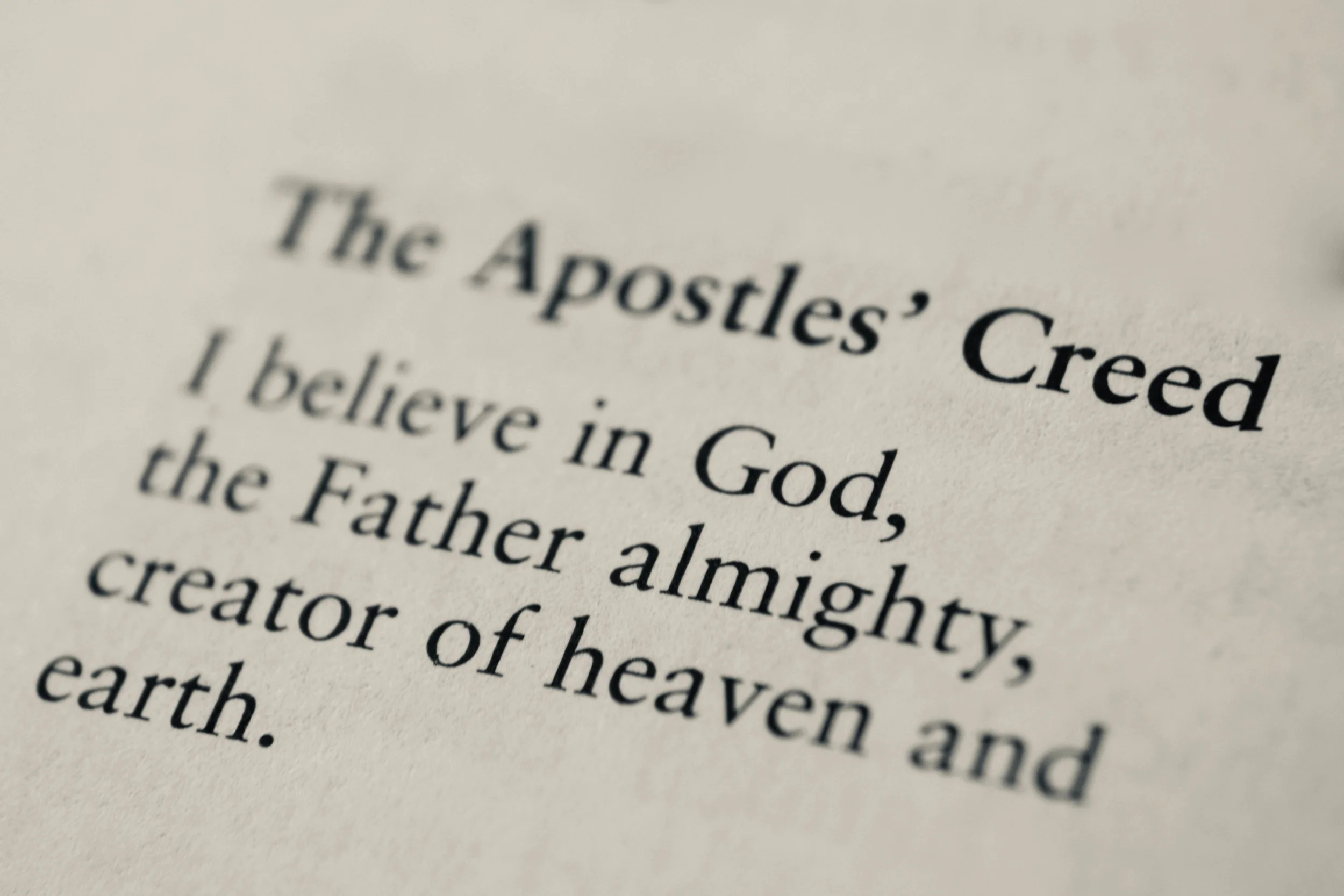
I believe in God, the Father almighty,
creator of heaven and earth.
People sometimes think that any belief in God qualifies a person for heaven, but in the ancient world, almost everyone believed in some kind of god. The question was whether a person trusted in the true God. The first statement in the creed requires individual, personal faith in the God who is Father, almighty, and creator.
Calling God Father here describes His relationship to the Son, not so much His relationship to us. While it is also true that the Bible calls God our Father, this title prepares us to see God as a Trinity: Father, Son, and Holy Spirit.
God is all-powerful and so able to accomplish all that He purposes. As creator, He is the maker and therefore the rightful ruler of heaven and earth. And “heaven and earth” are listed like “night and day” or “east to west,” giving two opposites as a way of describing everything in between. God is the creator of all things.
Section 2 tells the story of Jesus
I believe in Jesus Christ, his only Son, our Lord,
who was conceived by the Holy Spirit
and born of the virgin Mary.
He suffered under Pontius Pilate,
was crucified, died, and was buried;
he descended to hell.
The third day he rose again from the dead.
He ascended to heaven
and is seated at the right hand of God the Father almighty.
From there he will come to judge the living and the dead.
To be a Christian is to trust in Jesus as Christ, Son, and Lord. Christ simply means anointed one, the promised Messiah. To call Jesus “Son” doesn’t just mean that He’s a child of God the way that all believers are. Jesus is the “only Son,” the second member of the Godhead, who is Himself divine and uniquely related to God the Father. Jesus is our Lord in that He’s the one to whom all believers owe their allegiance and commitment. The story that follows describes why.
Jesus entered our world and took on a human nature through the miracle of the Holy Spirit who conceived Him and in the womb of the virgin Mary who bore Him. Jesus’ conception by the Holy Spirit ensured that He took on a full human nature without inheriting our sin nature. Belief in this event is a good test of a person’s confidence in the miraculous.
Naming Pontius Pilate as the one under whom Jesus suffered crucifixion situates Jesus’ story in time and place as real, verifiable history.
Jesus’ death, burial, and resurrection are taken almost directly from 1 Corinthians 15:3-4, but the “descent into hell” is confusing and disputed. The problem stems from the fact that both the Latin and Greek words behind the English translation simply mean the realm of the dead for both the righteous and unrighteous, not the place of eternal torment that we call hell.
After His resurrection, Jesus ascended to heaven where He reigns with the Father until He returns to judge the world.
When someone says they believe in Jesus, this summary helps determine whether they believe what Scripture teaches about Him.
Section 3 affirms the results of salvation
I believe in the Holy Spirit,
the holy catholic church,
the communion of saints,
the forgiveness of sins,
the resurrection of the body,
and the life everlasting. Amen.
The final section begins with faith in God the Spirit. His name highlights His holiness, and He is the one who applies the benefits of salvation to believers.
On the Day of Pentecost, He gave birth to the church. The catholic church here doesn’t mean the Roman Catholic denomination, but rather the universal church made up of all believers. The communion of saints describes the relational sharing of believers together in community. The creed gives no place for a person who believes in Jesus but doesn’t believe in the church or the need to share in fellowship with other believers.
The section ends with three aspects of our salvation: forgiveness, resurrection, and eternal life. The resurrection of the body is the one that people most often ignore. People think of “going to heaven,” but the reality is that our bodies will be raised and made new and more glorious. We have a great salvation.
As you affirm the Apostles’ Creed, you stand in agreement with Christian truths that have been taught and recited for hundreds of years in congregations around the globe. As you read through it, reflect on why these truths in particular were seen as so primary. Take any statement you’re unsure about back to Scripture. And consider how the Apostles’ Creed could help you teach your children and confirm their understanding of our faith.
In awe of Him,
Paul