
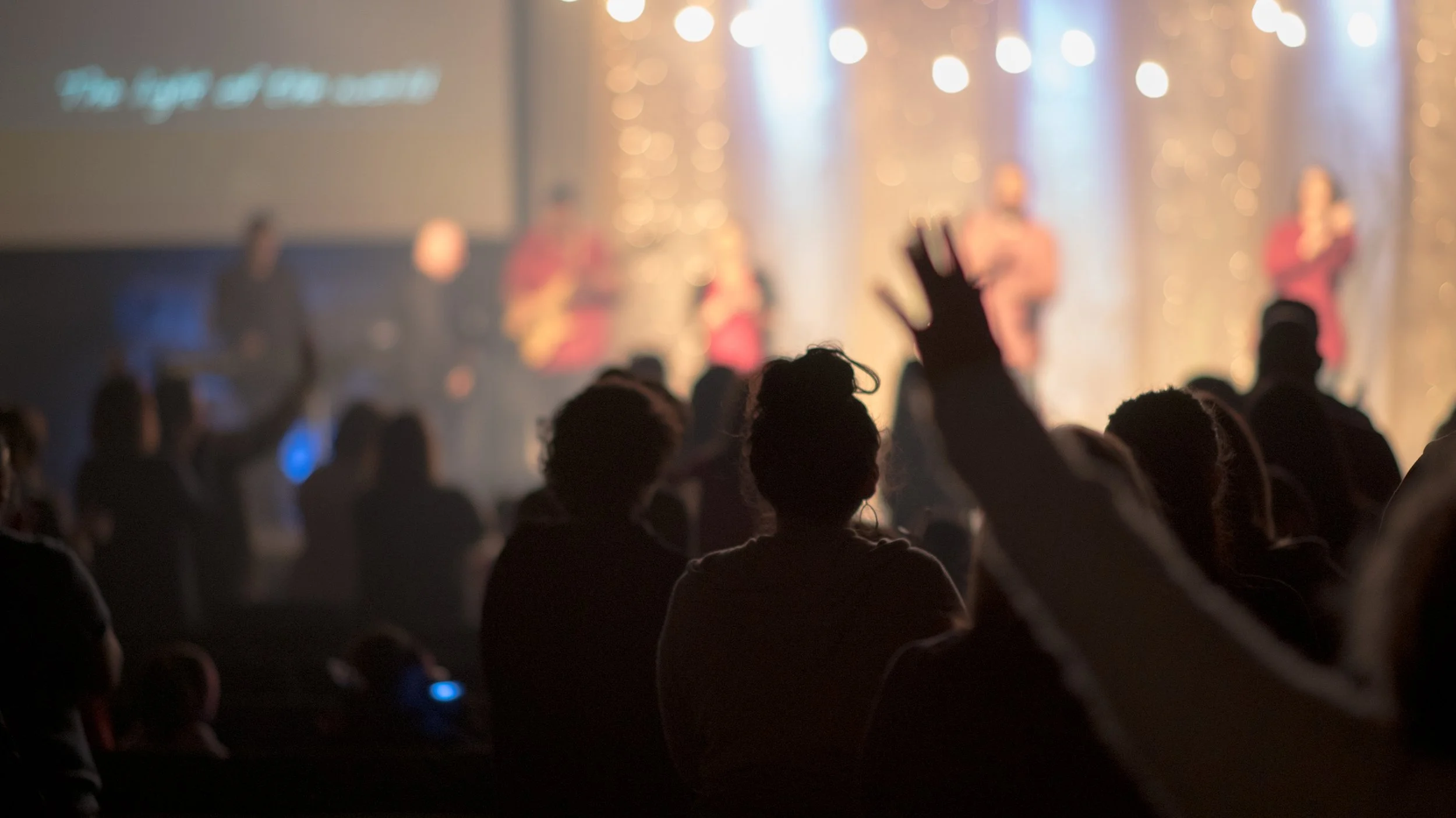
It’s strange to me that many churches that are among the most earnest in their commitment to the Bible are also among the most negligent in following the Bible’s teachings about how worship is to be expressed. We worship God earnestly with our minds, but we’re often slow to express worship with our bodies. People often think of it as a matter of personality or preference, but the Bible itself is more prescriptive. Consider what these commands show us about the holistic nature of worship.
1. Clap
Psalm 47:1 commands, “Clap your hands, all peoples! Shout to God with loud songs of joy!” While they may have been keeping time with the music, clapping is normally associated with joy and celebration (Psalm 98:8; 2 Kings 11:12). Clapping in worship is a way of adding a grateful exclamation mark to the message of a song and the One we worship.
2. Kneel
Kneeling and bowing down are frequently described as expressions of worship. Psalm 95:6 says, for example, “Oh come, let us worship and bow down; let us kneel before the LORD, our Maker!” Both Jesus (Luke 22:41) and Paul (Acts 20:36) modelled kneeling in prayer. The idea is that we’re lowering ourselves to express our humility before God.
3. Lift up your hands
Psalm 134:2 says, “Lift up your hands to the holy place and bless the Lord!” In the New Testament, similarly, Paul says, “I desire then that in every place the men should pray, lifting holy hands without anger or quarreling” (1 Timothy 2:8). Lifting our hands can express dependence (Psalm 28:2), longing (Lamentations 2:19), or praise (Nehemiah 8:6).
4. Shout
Many Christians assume that worship should be expressed quietly as a mark of reverence. But believers are regularly called to shout. Psalm 47:1, for instance, says, “Shout to God with loud songs of joy!” In fact, while the worshippers were called to shout, those leading worship were instructed to use instruments that would add to the volume. Consider Psalm 150:5, “Praise him with sounding cymbals; praise him with loud clashing cymbals!” When the worship of heaven is described, it’s compared to “the roar of many waters and like the sound of mighty peals of thunder” (Revelation 19:6). It looks like we’ll all need earplugs!
5. Dance
Reading the psalms, it’s clear that dancing is also something that is to accompany worship. Psalm 149:3 says, “Let them praise his name with dancing” and Psalm 150:4 says, “Praise him with tambourine and dance.” Jesus even taught that we should “leap for joy” when we are persecuted for our faith.
6. Love others and reflect God’s order
It would be easy for someone to read the Bible’s commands about worship and follow them recklessly. The New Testament stresses that love (1 Corinthians 13:1-3) and order should mark the gathering of God’s people. As Paul says, “all things should be done decently and in order” (1 Corinthians 14:40). So if someone is dancing on their neighbour’s feet or shouting during a quiet moment of reflection, even a sincere expression of their worship could feel unloving and chaotic.
Somehow, churches need to find appropriate ways to guide their congregations in a fuller expression of worship while still preserving order and being considerate of those who gather. Believers also need to learn to respond to God with their whole being.
Clapping is appropriate in almost every other gathering where people are happy and excited. Why not in church? Kneeling is a challenge in most churches but could easily be incorporated in private and small-group prayer times. Lifting our hands is probably the simplest way to use our body in worship. When it comes from the heart, a shout of Amen or Hallelujah is an expression of praise that can bless everyone. Dancing may be easier to picture in traditional cultures where group dances are a common feature of joyous gatherings, but maybe some of those traditions are worth reviving.
We need to be careful that we’re not being selective in our commitment to the instruction God has given regarding worship. Bob Kauflin gives a helpful challenge in this:
While heart worship is most important, what we do with our bodies isn’t irrelevant or unimportant. It’s not enough to say, “I’m worshiping God in my heart, and he knows it.” If I told my wife, Julie, that I loved her, but never looked glad to see her, never hugged her, and never demonstrated my affection in any concrete way, she wouldn’t be too impressed. We wouldn’t have much of a marriage either.
– Worship Matters, Leading Others to Encounter the Greatness of God
May God help us to worship Him with all that we are!
In awe of Him,
Paul