
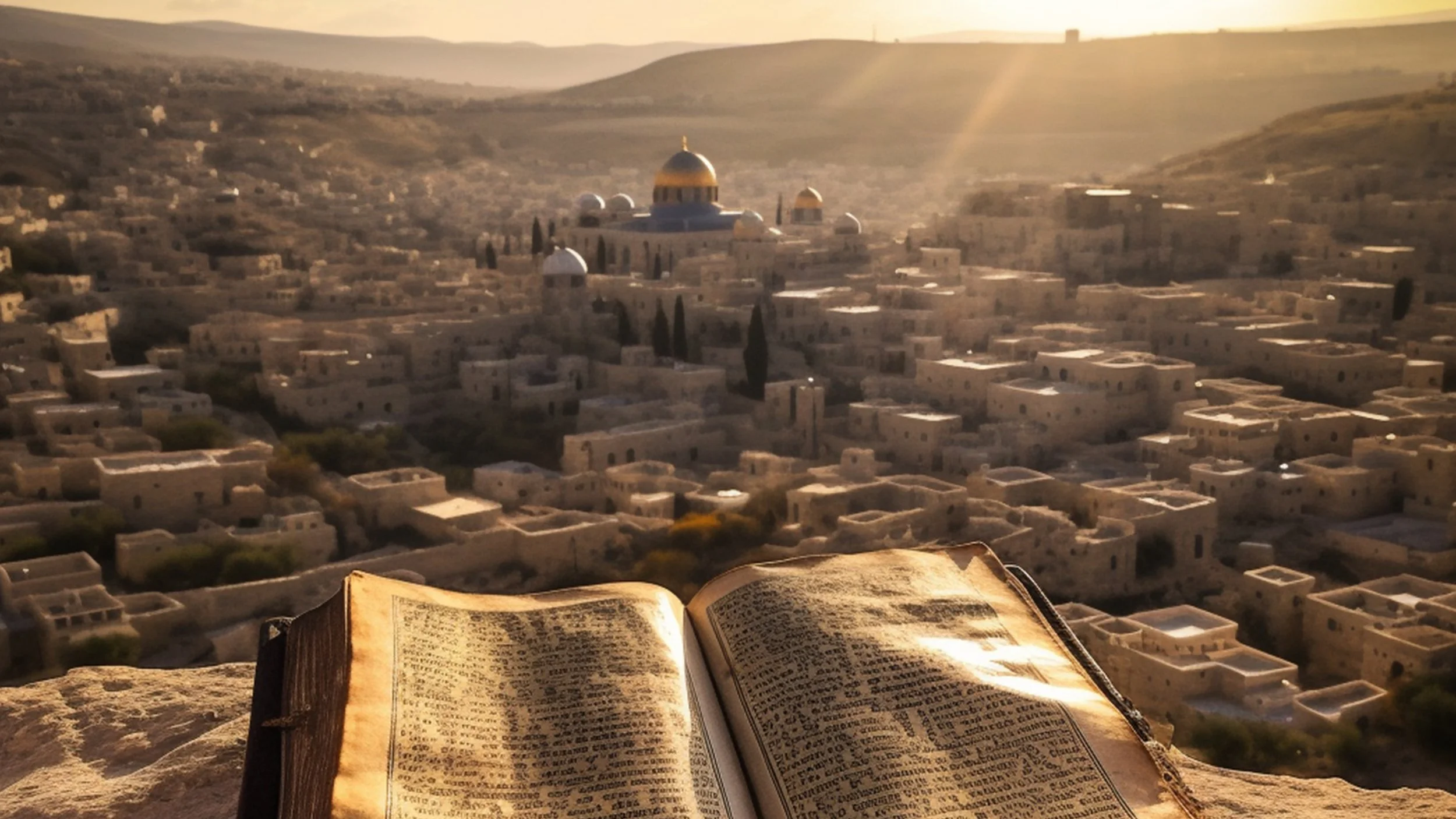

As you read the Old Testament, you can’t help but be struck by how often it speaks about the land that we now call Israel. How should a Christian read those verses? What significance does the land have for believers? Does the Promised Land still matter to the church today?
The Promised Land matters to Christians, not because we’re waiting to inherit a strip of land in the Middle East, but because the promise of land always pointed to something greater: the establishment of God’s people dwelling in God’s presence under the rule of God’s King.
The Promised Land was part of a larger story
When we talk about the Promised Land, we’re referring to the promise made to Abraham in Genesis 12:7: “To your offspring I will give this land.” Genesis 15:18 further describes its boundaries: “On that day the LORD made a covenant with Abram, saying, ‘To your offspring I give this land, from the river of Egypt to the great river, the river Euphrates…’”
Farther back, though, the idea of the land has its roots in the Garden of Eden. God put Adam and Eve in a garden where they enjoyed fellowship with Him. But when they sinned, they were driven out of that land and away from His presence.
From that point onward, the Bible tells the story of people living in exile, away from God’s presence and longing for restoration. God’s promise to Abraham becomes one important step in reversing that exile. God would bring Abraham’s descendants into a land of blessing and dwell among them there.
The king who would solve the problem of exile and expand the Promised Land
When Israel and then Judah broke God’s covenant and gave themselves to other gods, they were sent into exile, first to Assyria (722 BC) and then to Babylon (586 BC). From there, they longed to return to the holy land where God had dwelt with them. In a sense, Israel repeated what Adam and Eve had done so many years before.
The repetition reinforces the dilemma: What hope does the promise of land offer if sin keeps preventing them from living there? The answer the Scriptures provide is that God would make a new covenant and give people a new heart (Jeremiah 31:31-33) and send a king whose rule would extend beyond Israel to the whole earth.
Psalm 2:8, for example, speaks of a king to whom God promises the nations as His heritage and the ends of the earth as His possession. Zechariah 9:10 promises a king who would usher in peace, establishing His rule, “from sea to sea, and from the River to the ends of the earth.” Clearly, the promise to Abraham was only the beginning.
Jesus’ followers are promised something bigger than Israel
While Abraham and His descendants were promised a specific land in the Middle East where God would dwell with them in a similar way to how God dwelt with Adam and Eve in the garden, we look forward to something bigger than Israel. We look forward to what the Old Testament prophets spoke of: a kingdom made up of all peoples where God’s anointed rules as King and the knowledge of God stretches to the ends of the earth.
When Jesus spoke of the kingdom of God and sent out His disciples to make disciples of all nations, His commission was rooted in this hope. And this is what motivated the early church. Paul said that Abraham and his offspring received the promise that he would be “heir of the world” (Romans 4:13) and 2 Peter 3:13 says, “But according to his promise we are waiting for new heavens and a new earth in which righteousness dwells.”
We’re promised a new creation, not just a garden or a nation. There will be no more exile because there will be no more sin. As Revelation 21:3 promises: “Behold, the dwelling place of God is with man. He will dwell with them, and they will be his people, and God himself will be with them as their God.”
The Promised Land is important because it reveals God’s heart to live with us. It helps us understand the storyline of Scripture. And it points us to Jesus and the kingdom of God. But Christians are not ultimately waiting to return to Israel. Jesus has extended the promise to people of all nations. The land where He will dwell with His people will extend over all the earth. And He lives with us now as Emmanuel, God with us, promising to never leave us nor forsake us.
May that promise fill your heart with wonder today!
In awe of Him,
Paul