

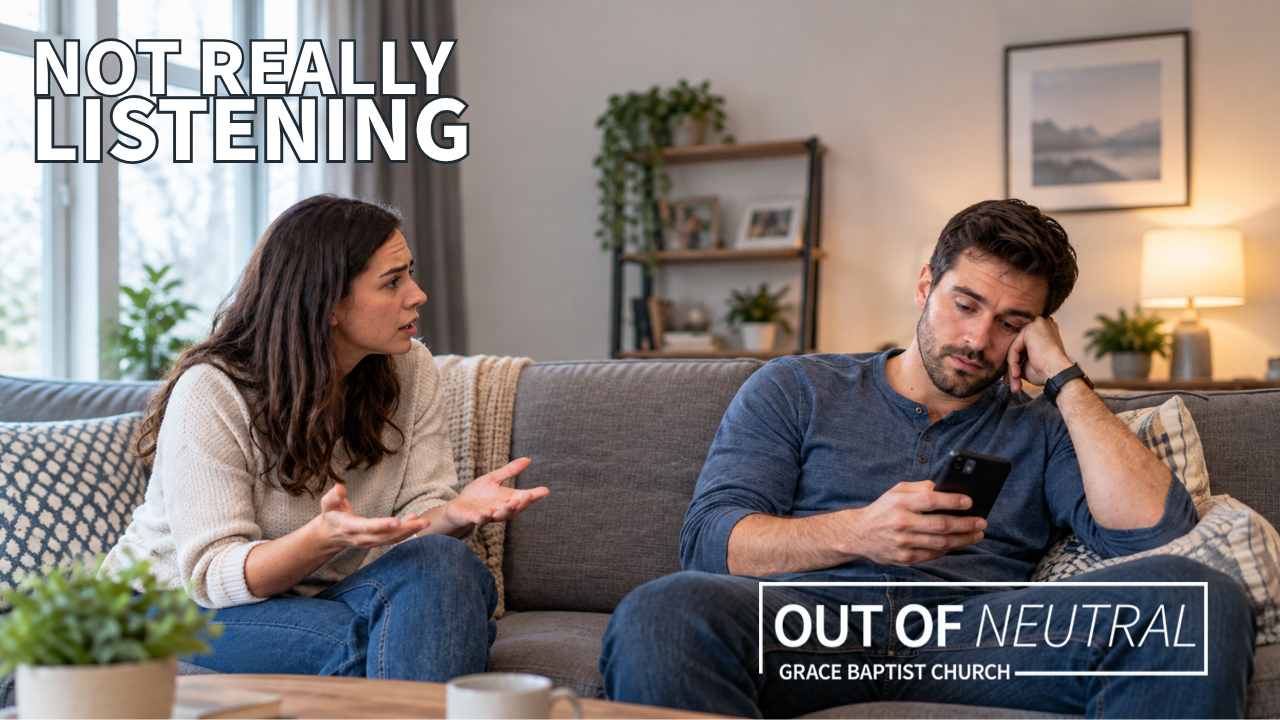
She walks in with her head down and heads straight to the bedroom. He asks how she is. “Fine,” comes the reply. He goes back to his phone. He was right to ask the question, but he was wrong to think he had the answer. She assumes he’s not interested and feels even more alone. He assumes that everything’s okay and misses an opportunity to connect. What you’re not hearing can have a profound impact on your relationship, but many people give too little thought to how they listen. Poor listening weakens marriages. Let’s consider how to grow in this area.
What a spouse hears when the partner won’t listen
Many couples have Ecclesiastes 4:9-10 read at their weddings: “Two are better than one, because they have a good reward for their toil. For if they fall, one will lift up his fellow. But woe to him who is alone when he falls and has not another to lift him up!” It’s a beautiful passage, but it assumes that your partner notices that you fell. It assumes that they will listen when you share your struggles. It assumes that they won’t make it worse by how they respond. When a spouse isn’t heard, the injury is doubled. Not only do they feel the pain of “the fall” but also the pain of feeling ignored. It’s like their spouse just stepped over them on the way to the refrigerator.
What gets in the way of good listening
The reality is that some people like to talk a lot more than they like to listen. Proverbs 18:2 says, “A fool takes no pleasure in understanding, but only in expressing his opinion.” And Proverbs 18:13 adds, “If one gives an answer before he hears, it is his folly and shame.” Deepening a relationship involves seeking to understand your partner, and you can’t do that when you’re talking or just hearing enough to jump in with your advice and solutions. People want to be heard more than they want to be diagnosed. People marry because they don’t want to feel so alone, and yet when the spouse fails to listen well, they’re left feeling isolated in the relationship.
Nothing shuts down communication in a relationship more than a temper. James 1:19-20 famously warns: “Let every person be quick to hear, slow to speak, slow to anger; for the anger of man does not produce the righteousness of God.” If your spouse feels like they can’t share their concerns without a lecture or, worse yet, an outburst, they’ll quietly pull away.
You might think you’re a better listener than you are
It’s easy to assume that you’re a good listener, even if you’re not. It’s worth asking your spouse questions like:
Is it hard to share negative feelings with me because of how I react?
What could I do to make it easier for you to open up?
When does it seem that I understand how you feel? When does it not feel like that?
Relational experts talk about the importance of active listening, where you summarize what your partner said and acknowledge both their words and their feelings as you do. If you see these moments as opportunities to understand your spouse and draw closer to them, it’ll help you to be curious rather than just listening long enough to try to fix them or defend yourself.
In all of this, the best example is the Lord Himself. In Psalm 139:1-4, David says of Him:
O LORD, you have searched me and known me!
You know when I sit down and when I rise up;
you discern my thoughts from afar.
You search out my path and my lying down
and are acquainted with all my ways.
Even before a word is on my tongue,
behold, O LORD, you know it altogether.
May God give us a heart to know our spouses the way the Lord knows us.
In awe of Him,
Paul