

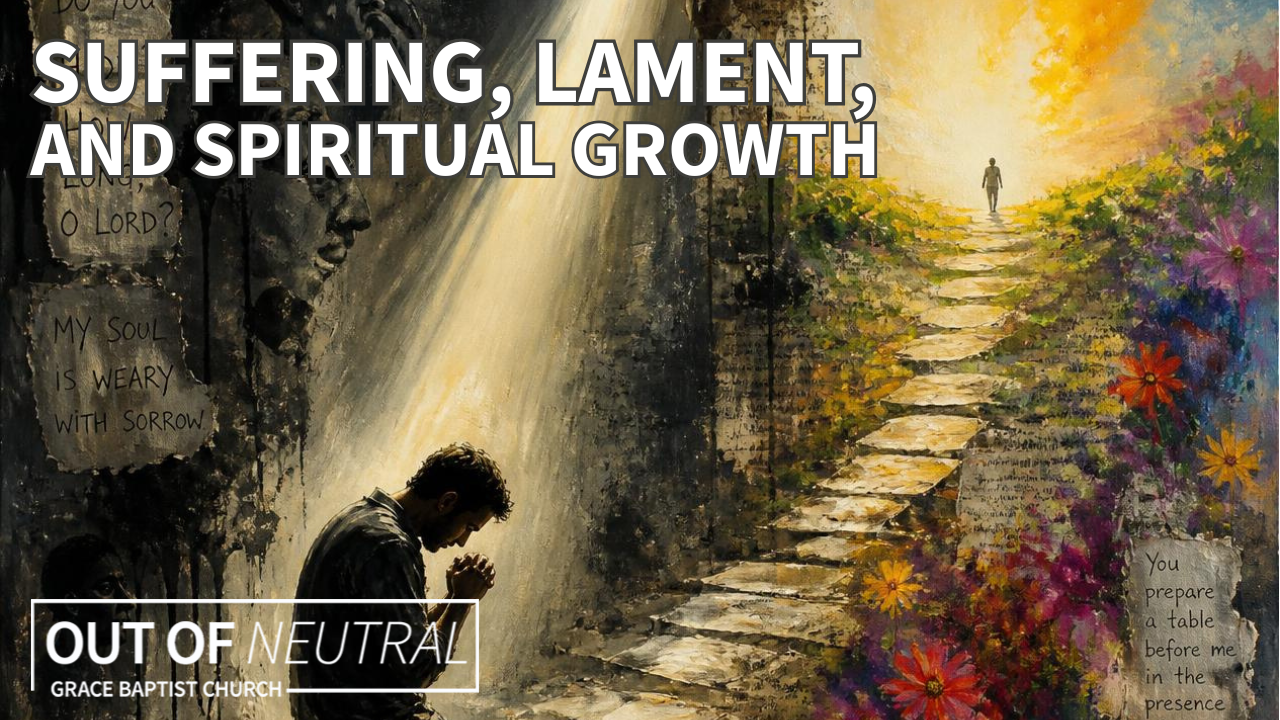
The Book of Job can be a struggle to read. Not only does it deal with unimaginable suffering, but it contains a lot of bad advice. Job’s “comforters,” Eliphaz, Bildad, and Zophar, are rebuked by God, who says to them, “you have not spoken of me what is right” (Job 42:7). Even when they say true things, their counsel is incomplete and misapplied.
Elihu is different. He’s the only one of Job’s advisers who isn’t corrected by God. While he doesn’t have all the answers, he does offer some helpful questions to ask when trials come.
1. Have I let lament become disrespectful?
One of Elihu’s primary concerns is the way Job speaks about God. It’s one thing to let out the pain; it’s another to blame God. Christopher Ash is helpful in distinguishing Elihu’s rebuke from that of Job’s other counsellors. While they accuse Job of suffering because he has sinned, he accuses Job of sinning because of his suffering. In other words, Job’s tragic circumstances may not be the result of sin, but he has sinned in his response to those circumstances.
Lament is the biblical practice of pouring out our hurt, grief, pain, and anger to God while remaining respectful of who He is and what we owe Him. Lament is holy complaint. Job’s response to suffering starts there, but exasperated by his circumstances, it goes farther. It crosses the line.
Job 32:2 says, “[Elihu] burned with anger at Job because he justified himself rather than God.” God Himself says something similar in Job 40:8. “Will you even put me in the wrong? Will you condemn me that you may be in the right?” This is an important contribution because God gives hurting people lots of latitude in their lament. At a certain point, though, we need to ask, “Am I disrespecting God? Am I defaming God to explain the pain that feels so undeserved?”
2. Could God be trying to get my attention?
Like Job’s counsellors, our tendency is to assume that the only reason God could bring painful circumstances into our lives is as punishment. Elihu reminds Job that sometimes God will use suffering to get our attention and speak into our lives. In Job 36:15, he says, “He delivers the afflicted by their affliction and opens their ear by adversity.”
We have an infinite capacity for self-deception, and too often, we simply ignore our blind spots and stall in our growth (Job 33:14). Sometimes, our affliction is God’s deliverance. It is His means to “open our ears” and help us listen.
Suffering should be our cue to pause and listen. What can I learn from this? Is there anything I’ve been ignoring? Are there areas of growth and maturity that I’ve been refusing to address?
Elihu shows us that we can face these questions with the hope that the affliction might be God’s deliverance rather than His punishment. We can face the trial with the anticipation that this might be the means God uses to finally help me turn the corner of my self-understanding.
3. Could God be trying to help me grow?
Elihu’s final contribution to our understanding of suffering is in viewing it as an essential part of our growth. In Job 33:17-18, he speaks of how God “may turn man aside from his deed and conceal pride from a man” and how “he keeps back his soul from the pit.”
How do you grow in compassion without facing loss? How do you grow in patience without being forced to wait? How do you grow in kindness without experiencing the cruelty of indifference?
Katherine Paterson, the author of “Bridge to Terabithia,” captures this idea in her description of her son David’s loss of his best friend Lisa. She says, “He’s not fully healed. Perhaps he never will be, and I am beginning to believe that this is right. … I want the joy of knowing Lisa and the sorrow of losing her to be a part of him and to shape him into growing levels of caring and understanding. But how can I say that I want him to ‘get over it,’ as though having loved and been loved were some sort of disease?”
That’s a mature view of suffering that recognizes that there are some things that only suffering can accomplish. Rough edges can only be made smooth by painful grinding. When we submit to that work, God often accomplishes His purposes in us more quickly.
Reflect on Elihu’s contribution to a theology of suffering, and ask yourself the questions he leaves us with.
In awe of Him,
Paul